
Can I Monitor Call Queue Wait Times Live?
Yes. Most modern
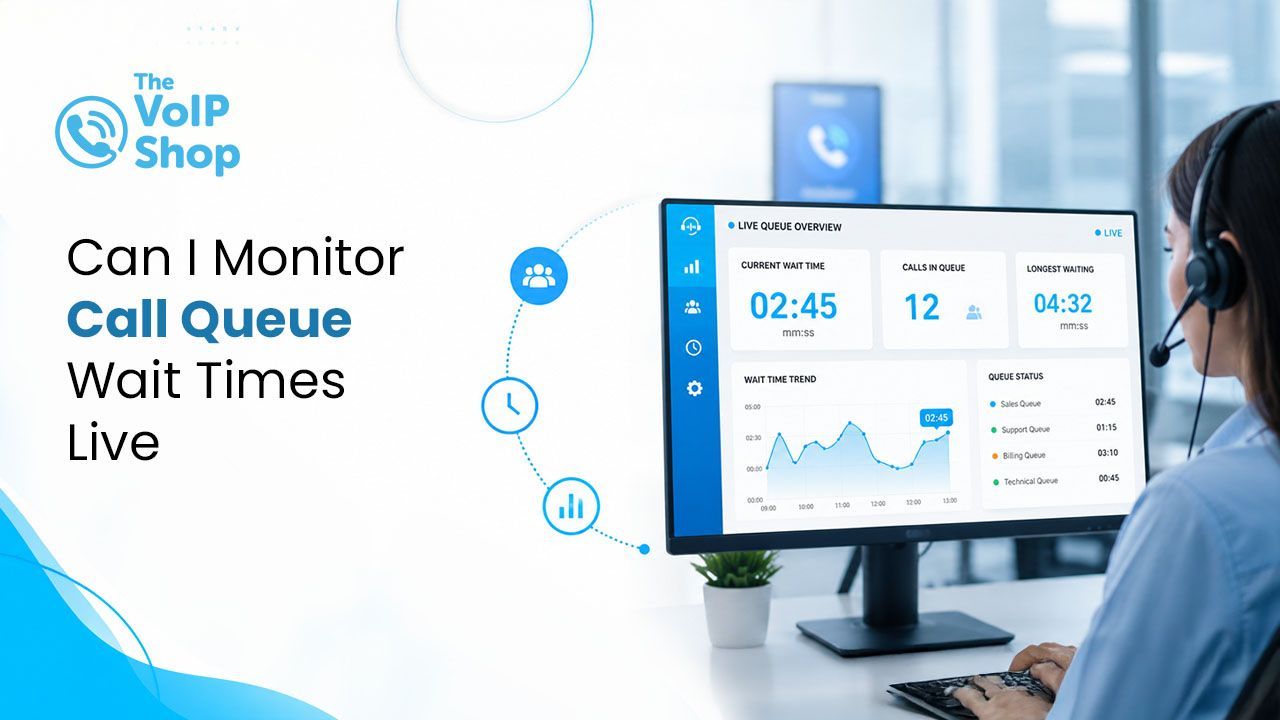
cloud VoIP systems provide real-time queue monitoring, so managers and supervisors can view live call queue wait times, the number of callers currently waiting, abandoned calls and agent availability as events happen. These insights are typically available through an online dashboard that can be accessed from any browser or device. Many systems also include wallboard functionality, letting live queue statistics be displayed on office screens so the whole team can monitor performance throughout the day.

About the Author
What Is a Call Queue?
A call queue, often referred to as an Automatic Call Distribution (ACD) queue, acts as a virtual waiting room for callers when all available agents are busy. Rather than receiving an engaged tone or being sent straight to voicemail, callers are placed into a queue until an agent becomes available. During this time, callers may hear music on hold, recorded announcements, or estimated wait time updates.
Call queues are commonly used by:
- Customer service teams.
- GP surgeries and healthcare providers.
- Contact centres.
- Property management companies.
- Financial services firms.
- Retail and e-commerce businesses.
When managed well, call queues help ensure callers are handled fairly and efficiently. Without visibility into queue performance, though, long wait times and abandoned calls can quickly become a problem.
What Does Real-Time Queue Monitoring Show?
Most cloud VoIP systems include a real-time analytics dashboard that gives immediate visibility into queue activity. Typical information includes:
- Current number of callers waiting in each queue.
- Longest waiting caller.
- Average queue wait time.
- Calls answered today.
- Calls abandoned before being answered.
- Agent availability and status.
- Number of active calls in progress.
Because this information updates continuously, managers can identify issues as they occur rather than waiting for end-of-day reports. For a wider view of how calls are logged across the whole team, see our team call history guide.
Why Does Real-Time Queue Monitoring Matter?
Real-time queue monitoring helps businesses reduce caller wait times, spot staffing shortages, prevent excessive call abandonment, improve customer experience, meet service-level targets, and respond faster during busy periods. Instead of discovering problems after they have already affected customers, managers can act immediately. For example, if wait times start climbing, additional staff can be assigned to answer calls before service levels deteriorate.
How Do Wallboards Give the Whole Team Queue Visibility?
Many cloud VoIP systems include wallboards that display live call queue information on office screens, televisions or browser windows. A typical wallboard may display:
- Calls currently waiting.
- Average queue wait time.
- Longest waiting caller.
- Calls answered today.
- Calls abandoned today.
- Agent availability.
- Team performance metrics.
- Service level indicators.
By making queue performance visible to everyone, wallboards create awareness and encourage teams to respond proactively during busy periods. Many organisations use colour-coded indicators to highlight queue health:
Green: operating normally.
Amber: increasing demand.
Red: immediate attention required.
This lets teams identify pressure points at a glance.
How Are Calls Distributed in a Queue?
| Call Distribution Method | Description |
|---|---|
| Round robin | Calls are distributed evenly across available team members in rotation, so workloads are shared fairly. |
| Longest idle | The next call is sent to the agent who has been available for the longest period. This is often used where call durations vary significantly between agents. |
| Priority routing | Certain callers, departments or enquiry types can be prioritised ahead of standard queue traffic. Useful for VIP customers, existing clients, emergency support requests or high-priority service contracts. |
| Overflow routing | If queue length exceeds a set limit, wait times become too long, or no agents are available, calls can automatically redirect to another team, a voicemail service, an out-of-hours provider or a backup contact. This prevents callers from waiting indefinitely during periods of exceptionally high demand. This pairs closely with after-hours and weekend call routing for round-the-clock coverage. |
What Do Callers Hear While They Wait?
Callers waiting in a queue do not have to sit in silence. Most cloud VoIP systems allow businesses to configure:
Music on hold.
- Marketing messages.
- Service announcements.
- Estimated wait time updates.
- Callback or voicemail options.
Keeping callers informed during the wait can significantly improve the customer experience and reduce abandonment rates. Callers tend to stay in a queue longer when they understand how long they are likely to wait.
What Historical Queue Reporting Is Available?
Alongside live monitoring, many cloud VoIP systems provide detailed historical reporting. This lets businesses analyse:
Average wait times.
Peak call periods.
Abandonment rates.
Agent performance.
Service-level achievement.
Call volumes by day and time.
These reports help identify trends, improve workforce planning, and ensure staffing levels match customer demand. Historical reporting is particularly valuable for organisations that experience predictable spikes in call volume at certain times of the day, week or year.
Which Businesses Benefit Most From Live Queue Monitoring?
Live queue monitoring can benefit almost any organisation that handles inbound calls, but it is particularly valuable for:
Healthcare providers. Managing high call volumes and ensuring patients receive timely assistance.
Financial services. Monitoring service levels and maintaining customer response targets.
Customer service teams. Maintaining consistent service quality and reducing wait times.
Property and lettings agencies. Managing spikes in enquiries during busy periods.
Retail and e-commerce. Handling order enquiries, delivery updates and customer support requests efficiently.
Contact centres. Maintaining visibility across multiple agents, teams and queues.
What Should I Check Before Choosing a Provider?
Most cloud VoIP systems offer queue management, but the depth varies. Key things to check:
- Is a real-time dashboard included as standard?
- Is wallboard functionality included or a paid add-on?
- Which call distribution methods are supported (round robin, longest idle, priority, overflow)?
- Can callers hear estimated wait time updates?
- Is historical queue reporting included alongside live monitoring?
- Can permissions be set so only supervisors see certain queues?
Final Thoughts
Call queues are only as effective as the visibility you have into them. Real-time dashboards, wallboards, colour-coded queue health, intelligent distribution and historical analytics turn a passive waiting room into a managed process. For any business handling meaningful inbound call volume, this is one of the practical wins of moving to a cloud VoIP system.
The VoIP Shop offers real-time dashboards, wallboards, ACD call queues, intelligent routing and detailed reporting as part of our cloud phone systems, backed by UK-based support.
Get in touch to see how live queue monitoring could work for your team.
Written By | About the Author
Kully has over 15 years of experience in the VoIP and telecoms industry. Drawing on a background in telecoms sales and leadership, he provides expert, impartial advice on VoIP and cloud telephony solutions. As a lead author for The VoIP Shop, Kully helps businesses understand and adopt modern communication technologies