
How Does an AI Receptionist Know Which Calls Are Urgent?
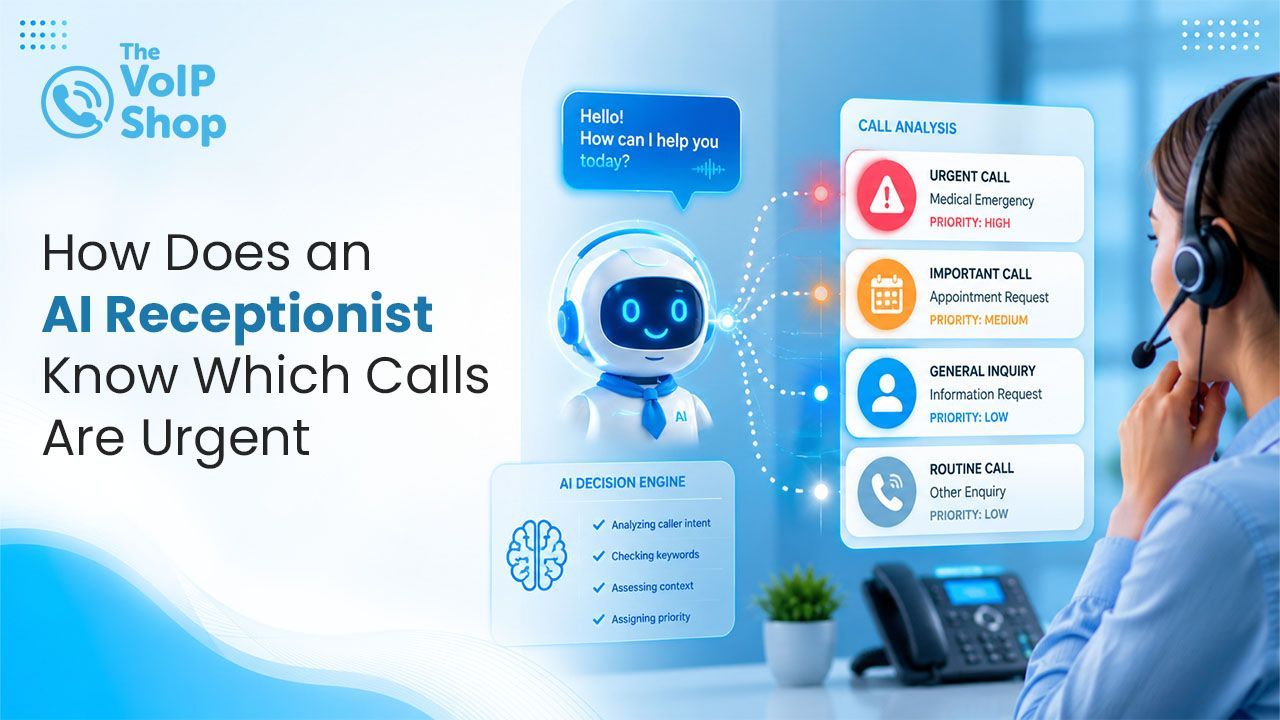
An AI receptionist identifies urgent calls using a combination of keyword detection, intent analysis, and business-specific routing rules. When urgency is detected, the system can automatically transfer the caller to the appropriate person, department, mobile number or on-call team. If the primary contact is unavailable, the call can be escalated through predefined backup routes, with notifications sent via email, SMS or both. The result is faster handling of critical enquiries while allowing routine calls to be managed efficiently.

About the Author
What Is an AI Receptionist?
An AI receptionist is an intelligent call-handling system that uses artificial intelligence and natural language processing (NLP) to interact with callers through natural conversation. Unlike traditional IVR systems that require callers to press menu options, an AI receptionist can:
- Understand spoken requests.
- Ask follow-up questions.
- Gather information from callers.
- Identify the reason for the call.
- Route calls to the appropriate person or department.
- Answer common enquiries automatically.
- Escalate urgent situations when required.
This creates a more natural and efficient experience for callers while reducing the workload on reception and customer service teams.
How Does the AI Identify Urgency?
| Layer | Description |
|---|---|
| 1. Keyword and phrase detection | The AI listens for words and phrases commonly associated with urgent situations. Generic examples include: Emergency. Urgent. Immediately. I need help now. This can't wait. Industry-specific examples can be added, such as: Healthcare. Chest pain. Difficulty breathing. Severe symptoms. Property management. Flooding. Gas leak. Break-in. No heating. IT support. Server down. Network outage. System unavailable. The keywords monitored can usually be customised to reflect the specific needs of the business. |
| 2. Intent classification | Urgency is not determined by individual words alone. Using natural language processing, the AI evaluates the meaning behind what a caller is saying. For example: "My roof is leaking and water is coming through the ceiling" may be identified as an emergency maintenance issue, even if the caller never says the word "urgent". Similarly, "Our phones have stopped working across the whole office" can be recognised as a high-priority technical issue requiring immediate escalation. This contextual understanding allows AI systems to make more informed routing decisions than keyword matching alone. |
| 3. Business rules and escalation policies | Every organisation defines urgency differently. Modern AI receptionist systems allow businesses to configure: Which enquiries should be treated as urgent. Which departments receive urgent calls. Which mobile numbers or extensions should be contacted. Escalation sequences if the first person is unavailable. Notification methods for critical incidents. This ensures the AI follows the organisation's specific operational requirements rather than relying on generic assumptions. For deeper coverage of routing rules across the day and week, see our after-hours and weekend call routing guide. |
What Happens After an Urgent Call Is Identified?
Once a call is classified as urgent, the system can take immediate action. Depending on the configuration, this may include:
- Transferring the caller directly to a nominated contact.
- Routing the call to an on-call engineer or support team.
- Escalating to a backup contact if the first person does not answer.
- Sending email notifications.
- Sending SMS alerts.
- Flagging the interaction as urgent within reporting systems.
- Prioritising recordings and transcripts for review.
The goal is to make sure urgent callers reach the right person as quickly as possible. For more on how urgent calls get transferred to a colleague's mobile in practice, see our call transfer guide.
How Are Non-Urgent Calls Handled?
The majority of inbound calls are not emergencies and can often be handled without immediate human intervention. An AI receptionist may assist by:
- Providing opening hours.
- Answering frequently asked questions.
- Giving directions or contact information.
- Taking messages.
- Collecting caller details.
- Booking appointments.
- Gathering information before transferring a call.
This lets staff focus on higher-value tasks while making sure callers still receive prompt assistance
Which Industries Benefit Most From AI Receptionists?
| Industry | Description |
|---|---|
| Healthcare | Healthcare organisations often receive a mix of routine appointment requests and more urgent enquiries. AI can help direct callers appropriately while making sure potentially serious situations are escalated quickly. |
| Property management | Emergency maintenance issues such as leaks, flooding, power failures or security concerns require a different response from routine tenant enquiries. AI can help identify the difference and route calls accordingly. |
| Legal services | Time-sensitive legal matters, urgent client requests and out-of-hours enquiries can be prioritised while general enquiries are handled through standard workflows. |
| SMEs and trades | Businesses that offer emergency call-out services can route urgent requests directly to on-call staff without needing someone to monitor the phones around the clock. |
| IT and managed service providers | Critical outages and service interruptions can be prioritised and escalated immediately, while lower-priority support requests follow standard support processes. |
Is an AI Receptionist Always Accurate?
No AI system is perfect. While modern AI technology can accurately identify intent and urgency in many situations, there will always be occasions where uncertainty exists.
For this reason, most AI receptionist systems include human fallback options. If the AI cannot confidently determine the caller's intent, the call can be transferred to a member of staff rather than risking an incorrect decision.
The purpose of an AI receptionist is not to replace human judgement entirely. It helps organisations handle larger call volumes efficiently while making sure important enquiries receive appropriate attention.
Why Do Businesses Use AI Receptionists?
An AI receptionist can help businesses:
- Answer every call, 24/7.
- Reduce missed calls.
- Route enquiries more accurately.
- Prioritise urgent situations.
- Improve customer experience.
- Reduce pressure on reception teams.
- Provide consistent call handling.
By combining automation with intelligent escalation, businesses can improve responsiveness without increasing staffing requirements. For a wider view of how urgent calls appear in team reporting, see our team call history guide.
What Should I Check Before Choosing a Provider?
Most AI receptionist platforms offer urgency detection, but the depth varies. Key things to check:
- Can keywords and phrases be customised for your industry?
- Does the system use natural language processing for intent, or only keyword matching?
- Can escalation sequences be configured with multiple backup contacts?
- Are notifications available via both email and SMS?
- Does the system include human fallback when the AI is uncertain?
- Are urgent interactions flagged in call reports and recordings for review?
Final Thoughts
Urgency detection is one of the practical differences between a traditional IVR menu and a modern AI receptionist. Instead of forcing callers through numbered options, the AI listens, interprets, and routes based on a mix of keywords, intent and your own business rules. For any organisation where the difference between a routine enquiry and an emergency matters, that intelligent triage is what makes AI receptionists genuinely useful.
The VoIP Shop offers AI receptionists, intelligent call routing and automated call handling as part of our cloud phone systems, backed by UK-based support.
Get in touch to see how an AI receptionist could work for your business.
Written By | About the Author
Kully has over 15 years of experience in the VoIP and telecoms industry. Drawing on a background in telecoms sales and leadership, he provides expert, impartial advice on VoIP and cloud telephony solutions. As a lead author for The VoIP Shop, Kully helps businesses understand and adopt modern communication technologies