IP Technology Explained
What Is IP Technology? A Plain-English Guide for UK Businesses (2026)
What Is IP Technology?
We talk or hear about IP technology in our day-to-day lives, but only a few know what it actually does. IP technology uses the Internet Protocol (IP) to exchange voice, video, and data across digital networks. It enables communication services to work using the internet rather than traditional circuit-based systems, offering better flexibility, scalability, and an extensive range of advanced features.
Put simply, IP technology is the foundation that your
business phone system, video conferencing, cloud tools, and broadband all sit on. It is what makes it possible for a dental practice in Manchester to take patient calls, a solicitor in London to record client conversations for compliance, and a retail chain across multiple sites to run on one unified phone system, all without a single copper telephone line.
How Does IP Technology Work?
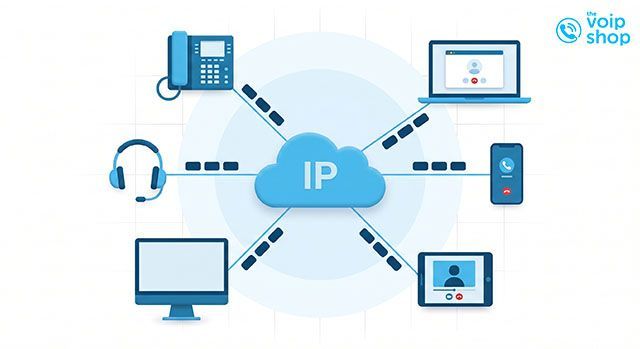
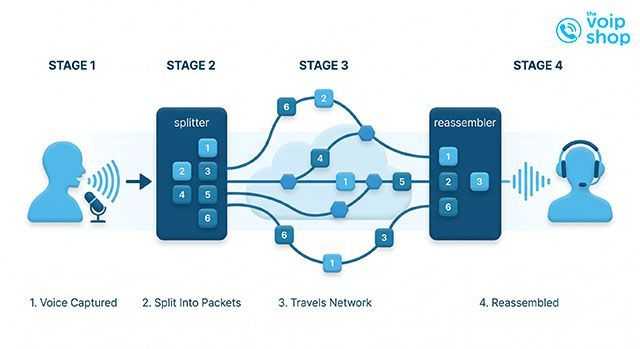
IP technology works by converting voice signals into digital data packets that travel across an IP network. Unlike traditional
telephone systems that dedicate a fixed circuit to every call, IP sends data in small packets that find their own route across the network and reassemble at the destination.
The process works like this:
- Your voice is captured and converted into digital data
- That data is broken into small packets, each labelled with a destination address
- The packets travel across your internet connection, potentially via different routes
- They arrive at the destination and are reassembled into audio in the correct order
- The result is a clear, reliable call, delivered entirely over the internet
This method supports far more than voice alone. The same underlying technology handles
video conferencing, instant messaging, file transfers, and AI-powered call features such as real-time transcription and automated call summaries.
Benefits of IP Technology for UK Businesses
IP technology offers multiple advantages over the analogue and
ISDN systems it replaces. For UK SMEs, the most meaningful benefits are practical and immediate.
Cost Saving
Running communications over IP is a lot cheaper than maintaining traditional telephone lines. Line rental costs are replaced by internet-based call bundles, long-distance charges are dramatically reduced, and maintenance costs fall because there is no physical on-site hardware to manage. Businesses switching to a cloud
VoIP system with The VoIP Shop typically save up to 40% on their existing phone bills.
Scalable and Future-Proof
Analogue and ISDN systems require physical engineer visits and new circuits to add capacity. With IP telephony, you add or remove users through an online portal in minutes. Whether your team grows from five to fifty, or you open a new office location, your phone system scales without disruption or delay.
Remote Work Capability
Because IP-based communications are not tied to a physical location, your team can answer calls, transfer colleagues, and access voicemail from any device, a desk phone, a laptop, or a mobile app, from anywhere with an internet connection. Staff use the same office number whether they are in the building or working from home.
Higher Call Quality
IP telephony, when paired with a quality broadband connection, delivers HD audio that meets or exceeds the clarity of traditional landlines. Unlike older copper networks prone to interference and degradation, IP calls are consistent and clear because voice data is given priority over other network traffic.
Advanced Features as Standard
.IP technology unlocks a range of features that simply do not exist on legacy systems. These include call recording, AI voicemail transcription, CRM integration, auto attendant, call queuing, interactive voice response (IVR), and real-time call analytics. At The VoIP Shop, over 40 features come included as standard across all plans.
What Is an IP Phone?
An IP phone is a device that uses IP technology to make and receive calls over the internet rather than a traditional phone line. There are two main types:
IP Desk Phone
A hardware device that connects to your network via Ethernet or Wi-Fi. It looks and operates like a traditional office phone but routes all calls over IP. The VoIP Shop includes a free Cisco or Yealink desk phone with every plan.
Softphone
.A software application installed on a laptop, tablet, or mobile device. It requires no additional hardware beyond a headset and an internet connection, making it ideal for remote workers and hybrid teams.
Both options work seamlessly together on The VoIP Shop platform, so your office-based and remote staff share the same system, the same internal extensions, and the same professional experience for every customer call.
What Is the Difference Between IP Technology and VoIP?
These two terms are often used interchangeably, but there is a useful distinction worth understanding.
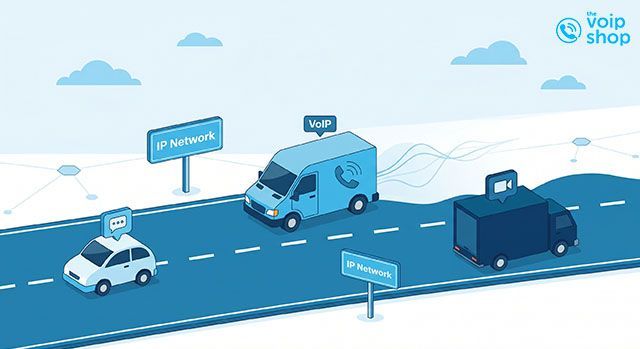
IP technology is the broad foundation, the set of protocols and infrastructure that carries all forms of digital communication, including voice, video, data, and messaging, across networks.
VoIP (Voice over Internet Protocol) is a specific application of IP technology. It refers specifically to the systems and tools that convert voice signals into digital data and carry telephone calls over an IP network.
"Think of it this way: IP technology is the road network. VoIP is the vehicle that carries your voice along it."
In practice, when a UK business switches from a traditional phone system to a modern cloud phone system, they are adopting VoIP, which in turn relies entirely on IP technology as its foundation.
What Is the Difference Between IP Telephony and Cloud Telephony?
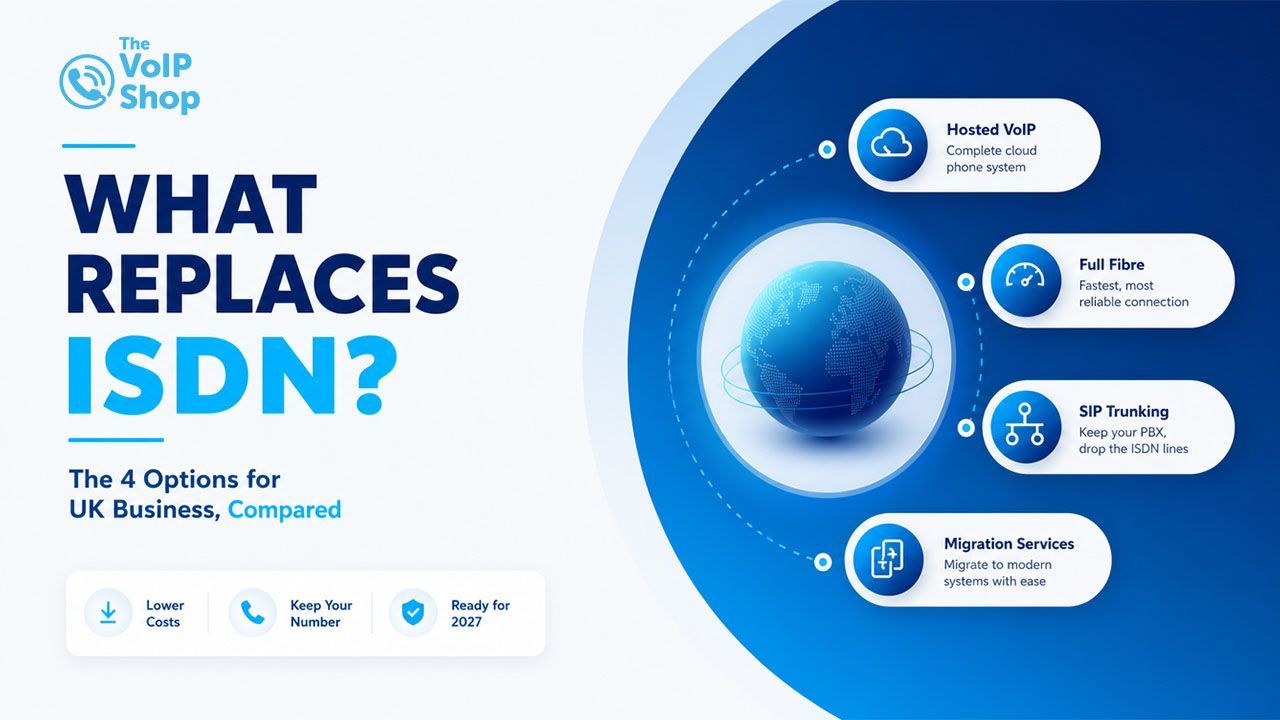
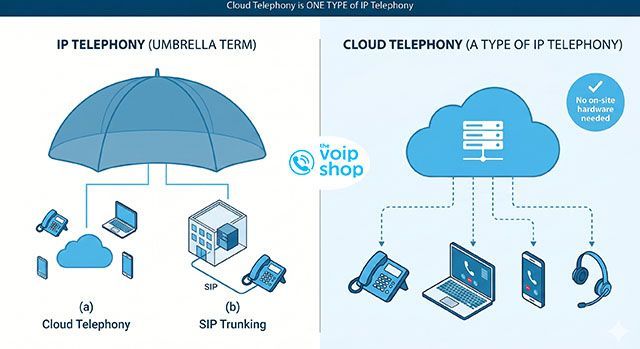
Cloud telephony is a type of VoIP technology, whereby your entire phone system infrastructure is hosted in a secure data centre, rather than on your premises. No PBX hardware needs to be installed, maintained or replaced on site.
And IP telephony is the umbrella term. This includes both cloud telephony as well as SIP trunking, the technology that connects an on-premise telephone system to the outside world via hosted IP, not traditional ISDN lines.
For most UK SMEs, cloud telephony is the most practical and cost-effective route. The VoIP Shop's cloud phone systems are hosted on Tier 1 UK infrastructure at Telehouse London, connected via BT Openreach, meaning your business benefits from enterprise-grade reliability without enterprise-level costs.
What Is the Difference Between IP Technology and ISDN?
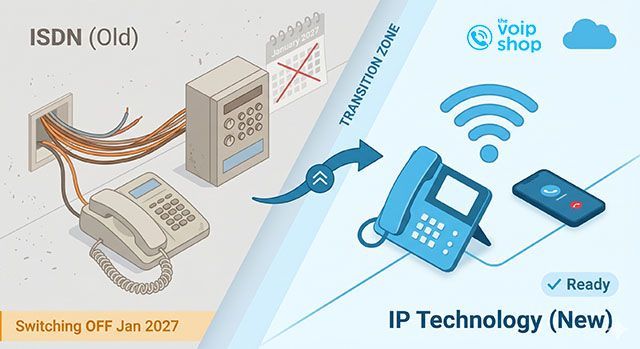
ISDN (Integrated Services Digital Network) was a significant step forward when it was introduced, enabling both voice and data transmission over digital telephone lines. However, it is a fixed, circuit-based technology that requires physical infrastructure at every site.
IP technology has made ISDN obsolete by delivering greater flexibility, lower cost, and advanced features that ISDN could never support. Crucially, ISDN is being withdrawn permanently in the UK. BT is closing both
PSTN and ISDN networks in January 2027.
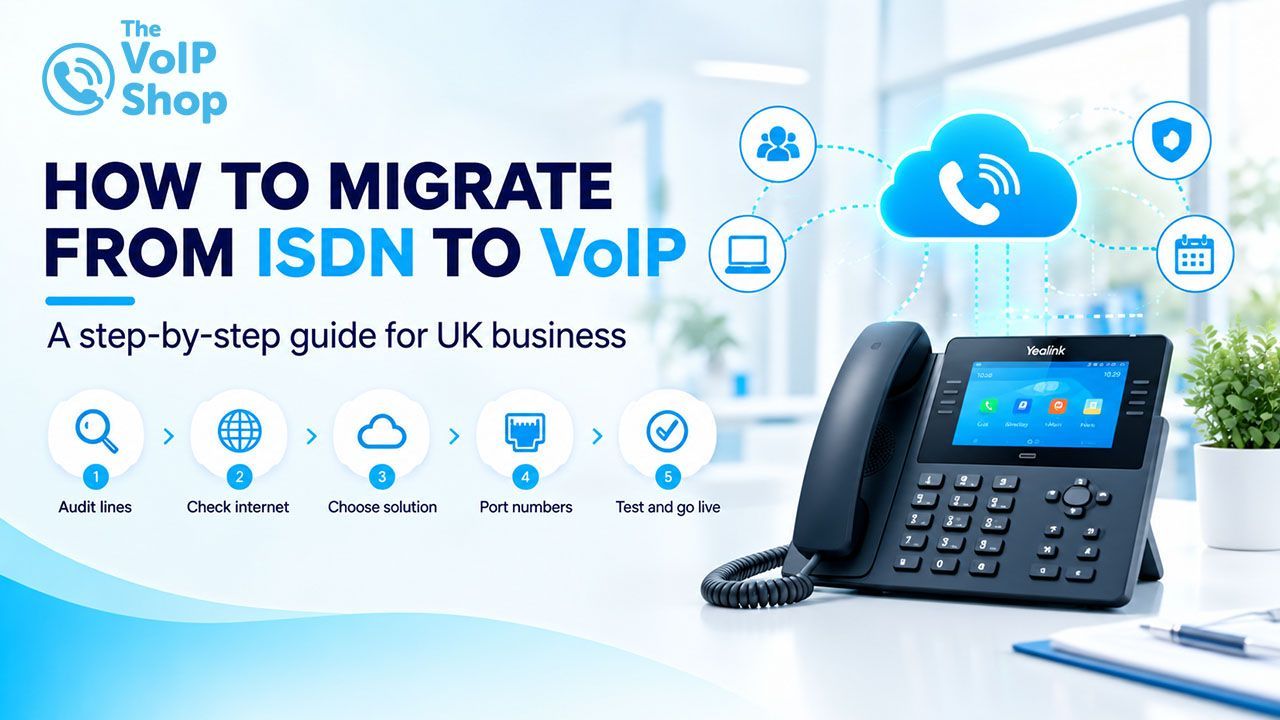
⚠ Warning: Any business still running on ISDN lines needs a plan to migrate before the January 2027 deadline. The VoIP Shop handles the full transition, from auditing your current setup to porting your existing numbers, with no disruption to your operations.
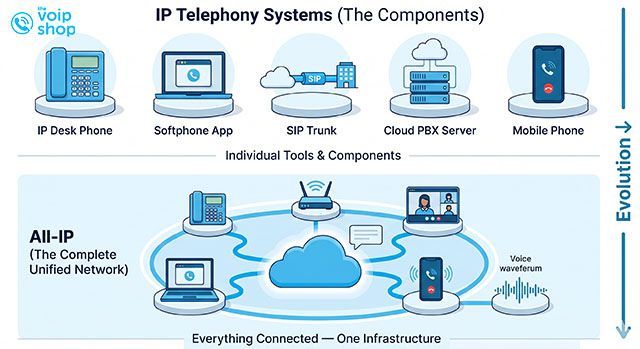
IP Telephony Systems vs All-IP: What Is the Difference?
These two concepts are related but not the same.
IP Telephony Systems
Refer to the specific tools and hardware that use IP to carry voice, video, and data. This includes IP desk phones, softphone applications, VoIP systems, SIP trunks, and cloud
PBX platforms. It is the technology your business uses day to day to communicate.
All-IP
Refers to the complete transformation of all communication services to IP-based networks. Voice, video, messaging, and broadband all running over a single unified IP infrastructure. In an all-IP environment, there is no remaining dependence on analogue or ISDN systems. Everything is digital, everything is connected, and everything is managed in the cloud.
The UK's January 2027 switch-off is the deadline by which every business must reach an all-IP state. For businesses that plan ahead, this is an opportunity to significantly upgrade capability while reducing costs. For those who leave it too late, it is a serious operational risk.
Challenges and Requirements of IP Telephony
IP telephony requires a reliable internet connection and IP-compatible devices. The main considerations for UK SMEs are:
- Broadband quality. Your internet connection needs to be stable and fast enough to handle your peak number of concurrent calls alongside your normal data usage. The VoIP Shop assesses your current connection as part of the onboarding process and recommends an upgrade, if necessary, with business broadband, full fibre, and leased line options available.
- Network configuration. Quality of Service (QoS) settings on your router should prioritise voice traffic to maintain consistent call quality. The VoIP Shop's team handles this configuration for you.
- Security. IP-based communications require encryption and proper firewall configuration to protect call data. The VoIP Shop is Cyber Essentials certified and UK GDPR compliant, with all call data encrypted in transit and stored in line with ICO guidelines.
- Device compatibility. Existing analogue devices, fax machines, door entry systems, alarm panels, lift lines, may not be IP-compatible. These need to be identified and either upgraded or connected via an adaptor before the 2027 deadline.
Thanks to advances in cloud telephony, very little disruption is required for most businesses. The VoIP Shop manages the entire transition, including your number porting, device configuration, and staff training.
How The VoIP Shop Can Help Your Business Transition to IP
The VoIP Shop has supported over 10,000 UK businesses in moving to IP-based communications, trusted by organisations including the NHS, UK Parliament, and Amazon. As an assured supplier on the NHS Advanced Telephony Better Purchasing Framework and Cyber Essentials certified provider, we bring the same standard of security and reliability to businesses of every size.
Our cloud phone systems start from £13.95 per user per month and include:
We match or beat any like-for-like quote.
Ready to Move Your Business to IP?
The January 2027 PSTN switch-off is closer than many businesses realise. Whether you are planning ahead or have already received notice from your current provider, now is the right time to understand your options and take control of the transition.
Speak to one of our UK-based specialists today for a free, no-obligation consultation.
FAQs
Which companies provide IP technology solutions for business networks in the UK?
In the UK, businesses usually look at providers such as The VoIP Shop and other connectivity specialists for IP network services. For phone systems and cloud communications, many small businesses also use UK-based VoIP providers that offer hosted phone systems, mobile apps, and remote working features.
How do IP telephony systems improve communication for small businesses?
IP telephony helps small businesses by lowering call costs and giving them more useful features than traditional phone lines. Things like call forwarding, voicemail-to-email, call routing, and mobile access make it easier for teams to stay connected and respond quickly.
What are the top-rated IP technology products for video conferencing?
Popular video conferencing products include Zoom, Microsoft Teams, Google Meet, Webex, etc. For meeting room hardware, businesses often choose Jabra, Yealink, Poly, Logitech, or Cisco equipment.
What are the benefits of switching to a business IP phone system?
A business IP phone system is usually cheaper to run, easier to scale, and more flexible than a traditional phone setup. It also helps with remote work, because staff can take business calls from the office, home, or mobile device.
Can you recommend IP technology services suitable for remote working setups?
Yes, a good remote working setup usually includes hosted VoIP, business broadband, video meeting software, and secure access tools like a VPN. This gives staff a reliable way to make calls, join meetings, and work from anywhere without losing professionalism.