Migration Guide • 2027
5 Essential Steps for Switching Your UK Business to IP Telephony
40%
Average cost saving vs traditional landlines
2027
PSTN full switch-off deadline in the UK
5 min
Average time to set up a VoIP line with us
The way businesses communicate is changing for good. The traditional Public Switched Telephone Network (PSTN), which has underpinned UK business calls for decades, is being decommissioned. In its place, Voice over Internet Protocol (VoIP) is the modern standard, delivering calls over your existing broadband connection, with none of the limitations of analogue lines.
For small and medium businesses, this isn't just a technical upgrade. It's an opportunity to reduce costs, work more flexibly, and future-proof your communications from the ground up.
⚠ Important: Many SMEs are still operating on legacy landlines, unaware that their current system has an expiry date. When the PSTN switch-off completes, businesses relying on traditional phone lines will face service disruption — a rushed, reactive migration is far more disruptive than a planned one.
Why Small Businesses Can't Afford to Wait
Beyond compliance, VoIP unlocks capabilities that landlines simply cannot match — call routing from any device,
virtual numbers,
voicemail-to-email, and real-time call analytics. The move to IP isn't just necessary; it's a genuine competitive advantage for businesses that move early.
"
The switch to VoIP was the best operational decision we made last year. Setup took an afternoon, and we've saved hundreds every month since.
— The VoIP Shop Customer
5 Steps to a Successful VoIP Migration
A well-planned migration protects business continuity and maximises the benefits from day one. Here's how to approach it:
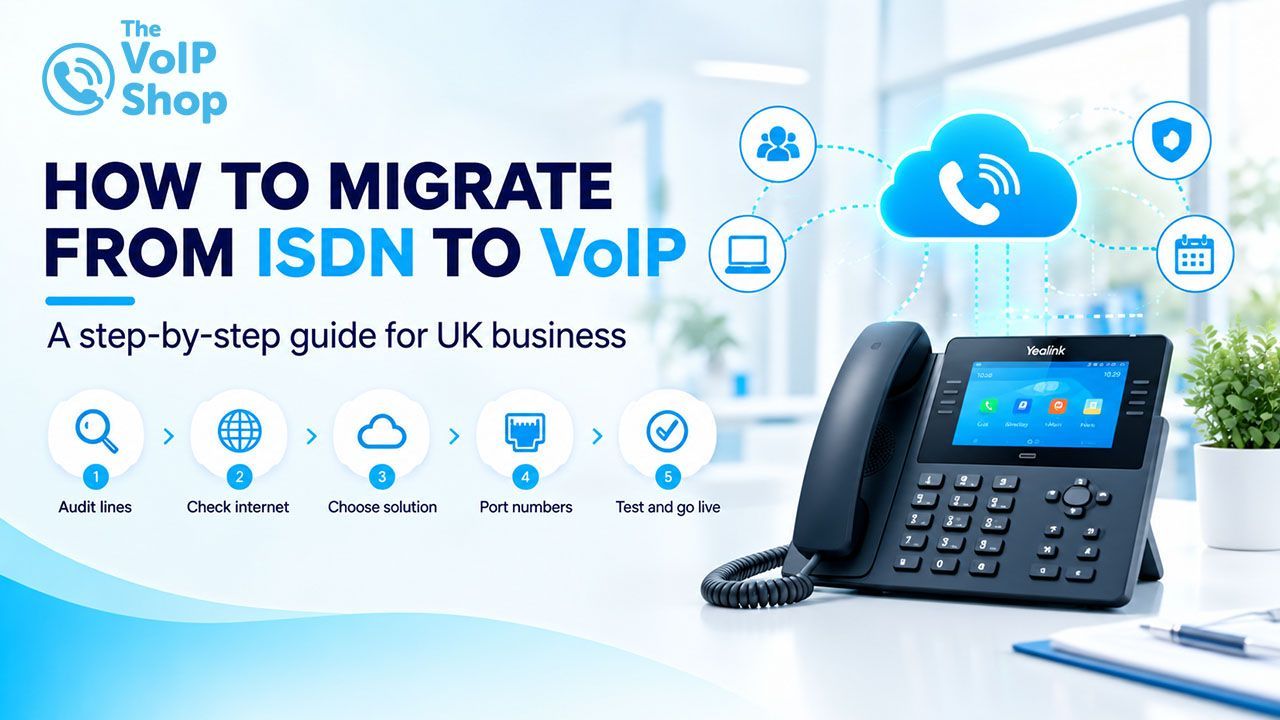
- Audit Your Current Setup
List every phone number, line, and device your business relies on — including fax machines, alarm systems, or card terminals that may use the phone line. Knowing what you have is the foundation of a clean migration.
2. Check Your Broadband Is Ready
VoIP runs over your internet connection. Most modern broadband is more than sufficient, but it's worth verifying your upload speed and router quality before you switch. Our team can advise on minimum requirements.
3. Choose the Right VoIP Plan for Your Team
Not all VoIP plans are equal. Consider how many simultaneous calls you need, whether you need a virtual receptionist or call queuing, and whether staff need to make calls from mobile devices. The VoIP Shop offers flexible plans built for SMEs.
4. Port Your Existing Numbers
.You don't have to lose your current business number. Number porting transfers your existing landline numbers to your new VoIP system, preserving continuity with clients and suppliers. We handle this process end-to-end.
5. Go Live and Optimise
Once set up, take time to configure call routing, set up voicemail, and brief your team. Most businesses are fully operational within a day. From there, your dashboard gives you full visibility over call activity and costs.
💡 Quick Fact: The VoIP Shop manages the entire migration process for you — from auditing your current setup, to number porting, to going live — so your team never misses a call.
Myths Many UK Businesses Have Before Switching to VoIP
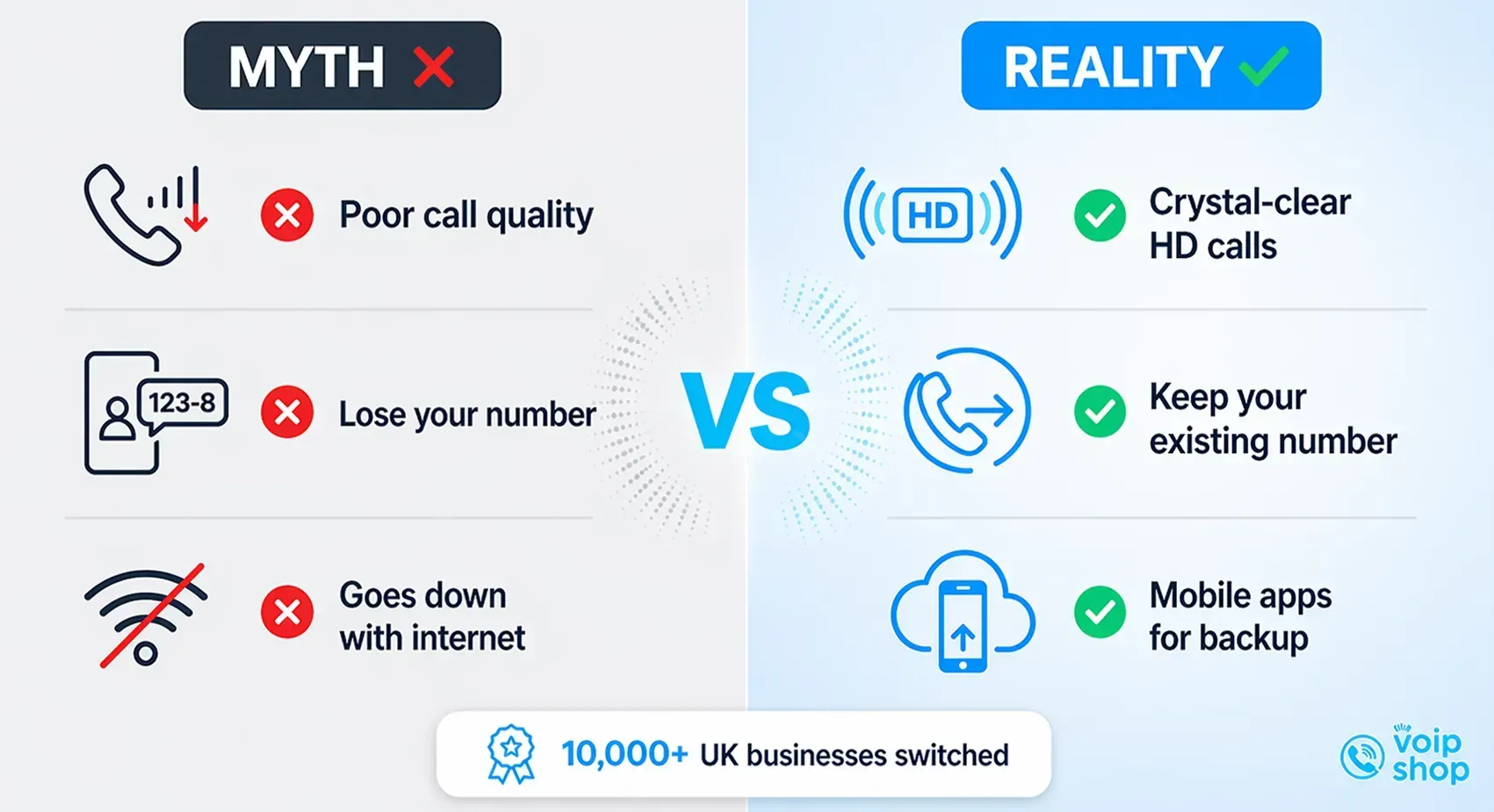
❌ Myth
"VoIP call quality is poor and unreliable."
✅ Reality
Modern VoIP over a stable broadband connection delivers HD-quality audio that rivals — and often exceeds — traditional landlines.
❌ Myth
"Switching means losing my existing phone number"
✅ Reality
Number porting means you keep your existing business number. The process is straightforward, and we manage it on your behalf.
❌ Myth
"If the internet goes down, so does our phone system"
✅ Reality
VoIP systems
can be configured with failover routing, so if your broadband goes down, you can use mobile apps as a backup option wherever you need.
❌ Myth
"VoIP isn't secure enough for business use"
✅ Reality
Modern VoIP uses end-to-end encryption and is compliant with UK data protection standards. Security is baked into every
VoIP Shop plan.
Ready to Move Your Business to VoIP?
Get a free, no-obligation consultation with our team and find out how much you could save.
FAQs
How do I set up an IP phone system for my office with minimal downtime?
Start by reviewing your current phone setup, internet connection, and business call needs. Choose a reliable cloud-hosted VoIP provider like The VoIP Shop, set up the new system alongside your existing one, and test call routing, voicemail, and extensions before switching. Scheduling the final migration during quieter business hours helps avoid disruption.
How can I port my existing phone number to an IP telephony provider?
Choose a VoIP provider that supports number porting, like The VoIP Shop, and provide your current number, recent bill, and account details. Your new provider manages the transfer. Avoid cancelling your old service too early, as this can cause delays or downtime.
Do I need to buy new phones or hardware?
Not always. If you already use IP-compatible desk phones or headsets, they may still work. Older PSTN or ISDN handsets usually need replacing. Many businesses now use softphones on laptops and mobiles, reducing hardware costs. The VoIP Shop includes a free Cisco or Yealink desk phone with every plan.
How do I migrate a corporate phone system to IP without disrupting client calls?
Use a phased migration approach by setting up and testing the new VoIP system first. Move departments gradually, schedule number porting outside peak hours, and use temporary call forwarding if needed. A managed provider like The VoIP Shop helps ensure a smooth transition with minimal disruption.
What are the steps to configure a secure IP phone system for a medium-sized enterprise?
Choose a trusted provider like The VoIP Shop, use secure SIP trunking, strong passwords, and multi-factor authentication. Separate voice traffic from regular internet traffic, keep devices updated, and monitor call activity regularly to reduce fraud risks and improve reliability.