voip for dental offices
VoIP vs Landline for Business: Which Phone System Should You Choose
Your business phone system affects everything from how customers reach you to what your team pays per month. With the UK's traditional phone network heading toward retirement, the question of VoIP vs landline for business is more relevant now than ever.
Choosing between the two comes down to a handful of practical factors: cost, features, reliability, and how your team actually works. Some businesses still benefit from a traditional landline. Most, though, will find VoIP a better fit.
Here's a clear, honest comparison to help you decide.
How VoIP and Landline Phone Systems Work
Before comparing the two, it helps to know what each one actually does under the hood.
What Is VoIP?
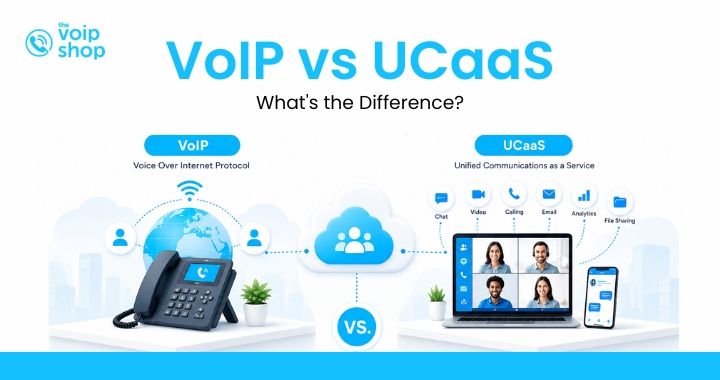
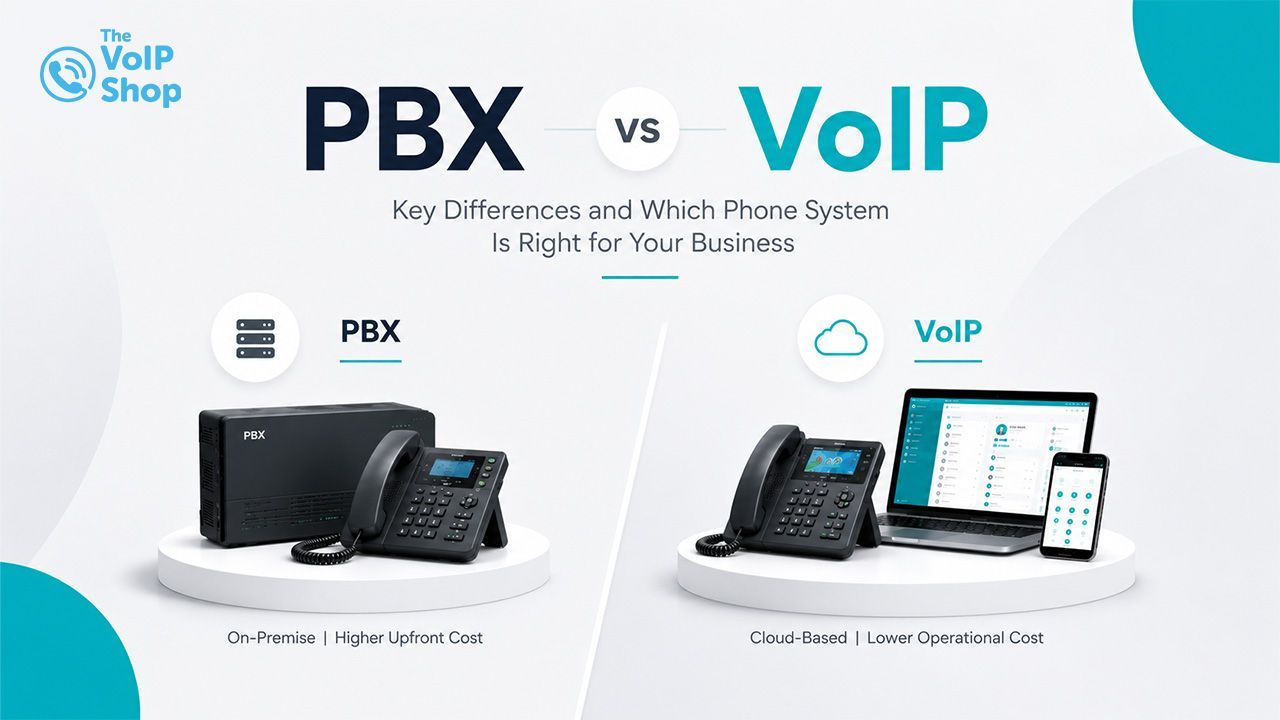
VoIP stands for Voice over Internet Protocol. A VoIP phone system converts your voice into digital data packets and sends them over an internet connection. Calls can be made and received on desk phones, laptops, tablets, or smartphones, so your team isn't tied to a single device or location.
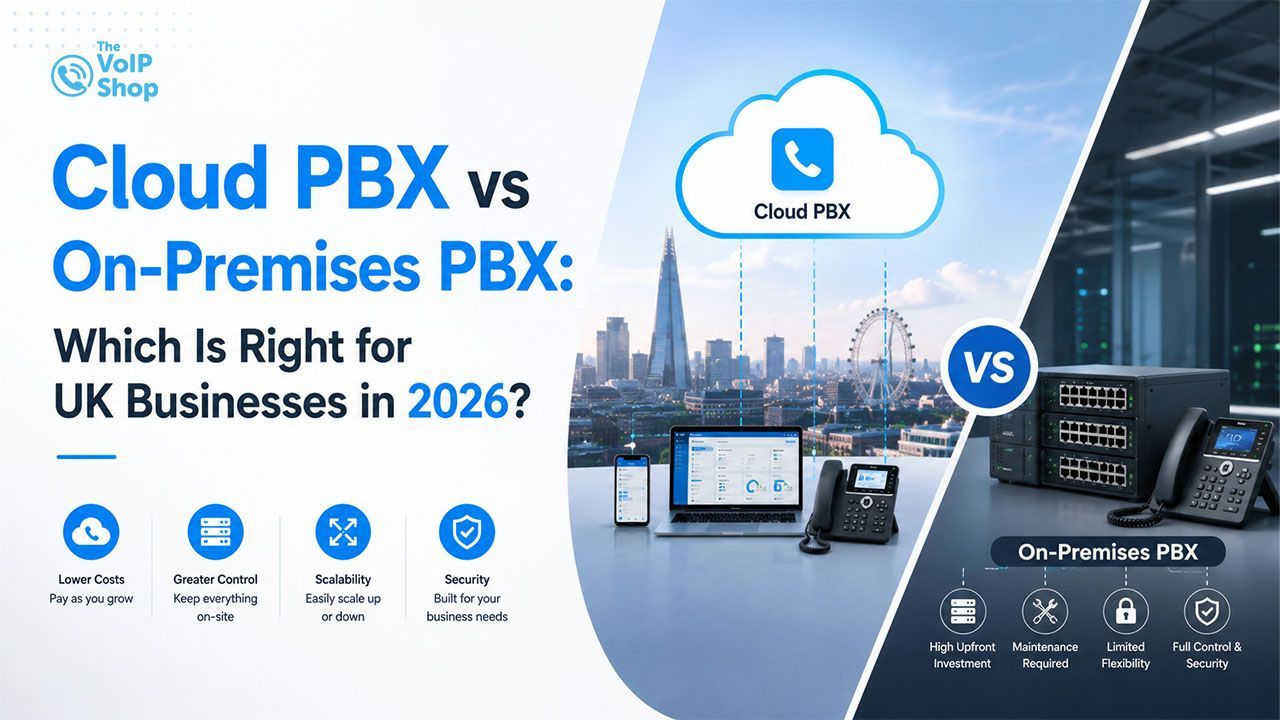
VoIP systems run in the cloud, which means there's no on-site hardware to maintain. Adding new users, setting up call routing, or connecting your phone system to a CRM takes minutes rather than days.
What Is a Landline?
A landline, sometimes called POTS (Plain Old Telephone Service), uses copper wiring to carry analogue voice signals through the PSTN. Each phone line is physically connected, and the call quality is consistent because it runs on a dedicated circuit.
Landlines have been the default for over a century. For businesses, a landline typically requires a Private Branch Exchange (PBX) system on-site to manage internal extensions and route calls. Adding new lines means new wiring, which adds cost and complexity.
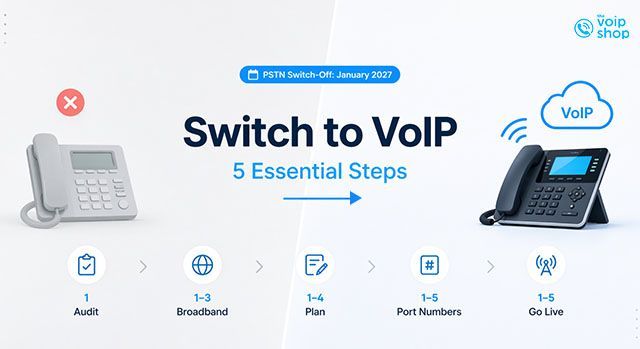
One important note for UK businesses: BT's PSTN is being phased out. The PSTN switch-off means traditional analogue lines will no longer be available, pushing every business toward an internet-based alternative.
VoIP vs Landline: Side-by-Side Comparison
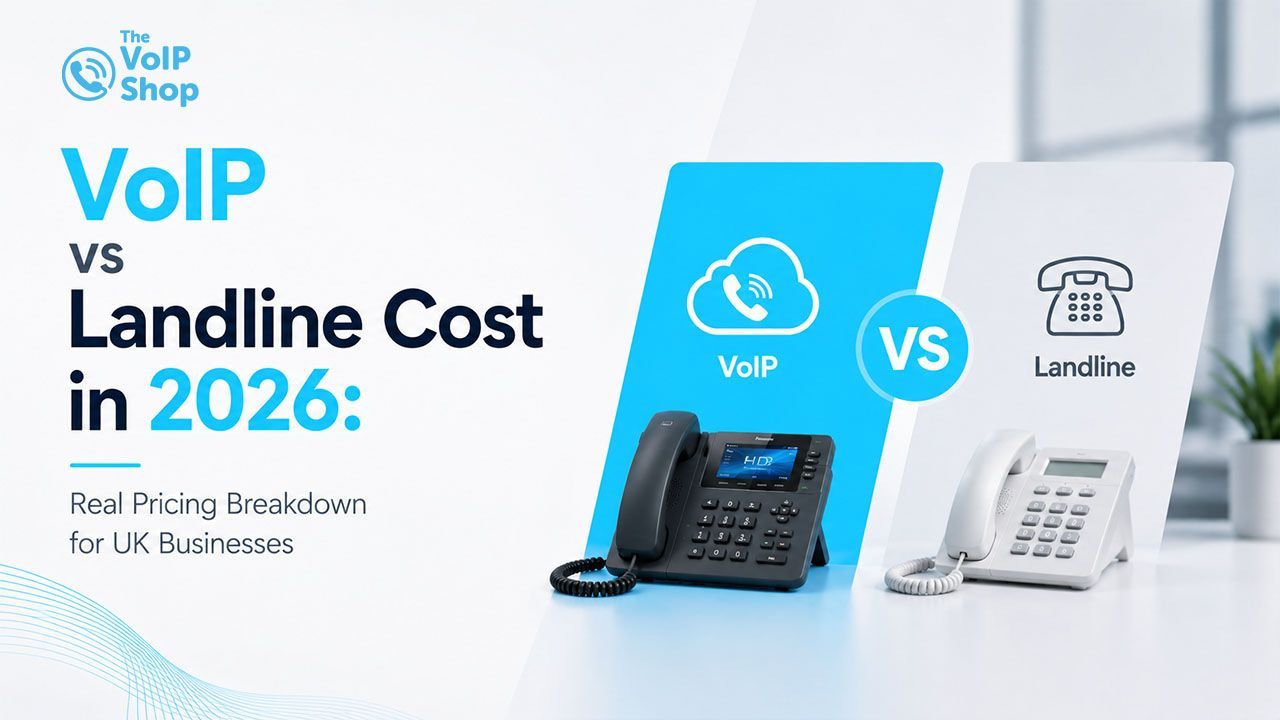
The table below breaks down how VoIP and landline systems compare across the factors that matter most to UK businesses.
| Factor | VoIP | Landline |
|---|---|---|
| Monthly Cost | Low | Higher, with per-line rental and add-on charges |
| Setup | Cloud-based, minimal hardware needed | Physical wiring, PBX equipment, technician visits |
| Call Features | Call routing, voicemail-to-email, analytics, auto attendant, CRM integration | Basic caller ID, voicemail, call forwarding |
| Scalability | Add or remove users in minutes via software | Requires new hardware, wiring, and installation |
| Remote Work | Works on any device with an internet connection | Tied to a physical desk phone at a fixed location |
| Reliability During Outages | Depends on internet and power, mobile failover available | Works during power and internet outages |
| Call Quality | HD voice with stable broadband | Consistent on dedicated copper lines |
| Future Availability | Growing, cloud-based infrastructure | Declining, PSTN retirement underway in the UK |
Where VoIP Wins for UK Businesses
For the majority of UK businesses, VoIP offers clear advantages over a traditional landline. Here's where those advantages show up in practice.
Lower Monthly Costs
VoIP plans are typically priced per user per month, and most include features that would cost extra on a landline. Long-distance and international calls are often included or charged at much lower rates. You also avoid the cost of maintaining on-site PBX equipment and paying for individual copper lines.
A
cloud phone system removes the need for expensive hardware. Setup is straightforward, and free onboarding is standard with reputable providers.
Advanced Call Features
VoIP systems come with built-in tools that landlines simply don't offer. Auto attendants route callers to the right person without a receptionist. Voicemail-to-email sends recordings straight to your inbox. Call recording keeps a secure log of every conversation for training or compliance purposes.
You also get access to
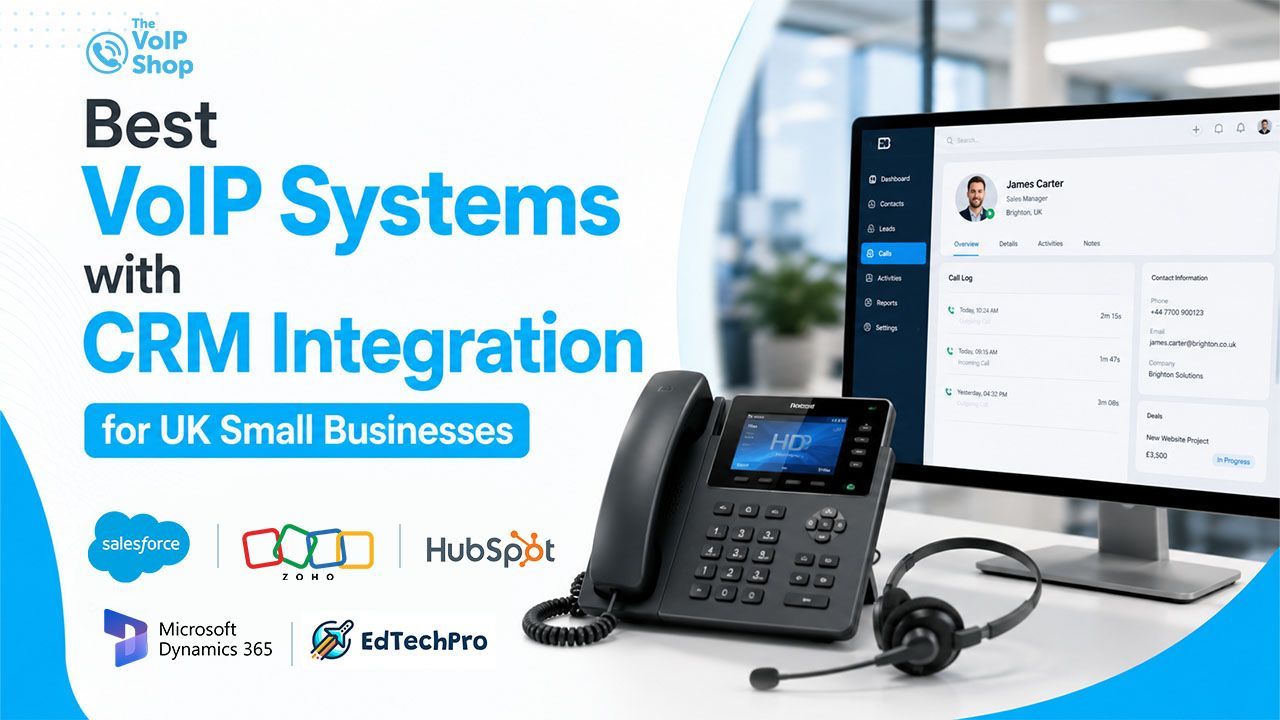
CRM integration, connecting your phone system to platforms like HubSpot, Salesforce, or Zoho so that customer data appears on screen the moment a call comes in.
Remote and Hybrid Work
VoIP doesn't care where your team sits. Staff can take calls on a laptop at home, a mobile phone on the road, or a desk phone in the office, all using the same business number. A landline, by contrast, only works at the physical location where it's wired in.
For businesses with remote employees, field teams, or multiple sites, VoIP is the more practical option.
Easy Scaling
Growing your team with a landline means scheduling a technician, running new cables, and buying more hardware. With VoIP, adding a new user takes a few clicks in a web portal. Seasonal businesses can scale up for busy periods and scale back down without penalty.
Where Landlines Still Have a Place
Landlines aren't obsolete yet, and for a small number of businesses, they remain a sensible option.
If your premises have unreliable internet, a landline gives you dependable voice communication without worrying about bandwidth or dropouts. Healthcare facilities, emergency services, and other operations where constant uptime is critical may keep a landline as a backup channel.
Landlines also provide accurate location data for emergency calls. VoIP systems can be configured for this, but a traditional line does it automatically.
For most other scenarios, a VoIP system paired with reliable
business broadband delivers equal or better reliability with far more capability.
Which Phone System Should You Choose?
The right choice depends on your business size, your internet reliability, and how your team communicates day to day.
VoIP is the better fit if you are a growing business that needs to add users quickly, a company with remote or hybrid staff, or a customer-facing operation that relies on call routing and CRM data. Most small business phone systems now run on VoIP for exactly these reasons.
A landline may still suit you if your location has poor broadband, or if you need a failsafe backup line for emergencies.
Many businesses choose a hybrid approach: VoIP as the primary system for everyday communication, with one or two landlines kept for redundancy. As the BT switch-off progresses, even those backup lines will need to move to a digital alternative.
The key point is that waiting is becoming harder to justify. The PSTN is closing, VoIP costs less, and the features gap between the two systems is wide.
Make the Switch Before the Switch-Off
The VoIP Shop helps UK businesses move from outdated landlines to fully managed cloud phone systems, with affordable monthly pricing, free onboarding, and 24/7 UK-based support. Every customer gets a dedicated account manager, and you can keep your existing business phone numbers throughout the transition.
Whether you need a straightforward VoIP setup or a full connectivity review covering broadband, mobiles, and AI-powered telephony, the team has 15+ years of experience making it simple.
Get Your Dental Practice Set Up with The VoIP Shop
Whether you're replacing an outdated phone system or setting up a new practice, The VoIP Shop's team handles the full migration for you. From porting your existing numbers to connecting your dental software, everything is managed so your staff can focus on patients rather than technical setup. With over 10,000 UK businesses already using the platform, your practice is in experienced hands.
A free, no-obligation consultation is the fastest way to see what the right setup looks like for your practice.
FAQs
Can I keep my existing phone number if I switch from a landline to VoIP?
Yes. Number porting allows you to transfer your current business phone number to a VoIP system. The process is handled by your new provider and typically takes a few working days.
Does VoIP work if my internet goes down?
VoIP requires an active internet connection to make and receive calls. Most providers offer mobile failover, which redirects incoming calls to a mobile number during an outage. A battery backup for your router also helps prevent short interruptions.
How much bandwidth does VoIP need?
VoIP uses roughly 100kbps per active call. A standard fibre broadband connection can handle 10 or more simultaneous calls without issues. Stable, low-latency broadband matters more than raw speed.
Is VoIP secure enough for business use?
VoIP providers use encryption protocols such as Transport Layer Security (TLS) and Secure Real-Time Transport Protocol (SRTP) to protect calls. Businesses in regulated sectors should confirm that their provider meets UK GDPR, Cyber Essentials, or PCI DSS requirements.
Will landlines still be available in the UK after the PSTN switch-off?
Traditional analogue landlines are being phased out as part of the UK's PSTN retirement. Businesses currently using landlines will need to move to a digital alternative. The switch-off is already underway, with completion expected by 2027.
Can I use VoIP with my existing desk phones?
Many traditional desk phones can connect to a VoIP system using an analogue telephone adapter (ATA). Alternatively, IP desk phones plug directly into your internet connection and are ready to use out of the box.