Cloud PBX vs On-Premise PBX
Cloud PBX vs On-Premise PBX: Which Is Right for UK Businesses in 2026?
Your phone system affects every customer call, every internal conversation, and every missed opportunity. Picking the wrong setup can mean overspending, losing flexibility, or dealing with downtime you can't afford. For UK businesses weighing up cloud PBX vs on-premise PBX, the decision comes down to a few practical questions: how much do you want to spend, how much control do you need, and how does your team actually work?
Here's a clear breakdown of both options so you can make a confident choice.
What Is a Cloud PBX?
A cloud PBX is a phone system hosted and managed by an external provider over the internet. Instead of owning servers and hardware in your office, you access your phone system through desk phones, desktop apps, or mobile apps. The provider handles all the infrastructure, updates, and maintenance in their data centres.
You pay a monthly subscription per user, and you can add or remove users as your team changes. Most
cloud phone systems include features like call routing, voicemail-to-email, call recording, and video conferencing as standard.
Who Is Cloud PBX Best For?
Cloud PBX works well for businesses that want low upfront costs, minimal IT management, and the ability to work from anywhere. Startups, small businesses, growing teams, and companies with remote or hybrid workers all benefit from the flexibility a cloud system provides.
What Is an On-Premise PBX?
An on-premise PBX is a phone system that sits physically at your business premises. You own or lease the hardware, including servers, gateways, cabling, and handsets. Your IT team (or a contracted provider) is responsible for setup, maintenance, upgrades, and security.
On-premise systems give you full control over your data and configuration. However, they require a large upfront investment and ongoing technical resources to keep running smoothly.
Who Is On-Premise PBX Best For?
On-premise PBX may suit larger organisations with dedicated IT teams, strict data residency requirements, or locations where internet connectivity is unreliable. Some businesses in heavily regulated industries also prefer the direct control an on-premise system offers.
Cloud PBX vs On-Premise PBX: Cost Comparison
Cost is often the deciding factor. The two models handle spending very differently.
| Factor | Cloud PBX | On-Premise PBX |
|---|---|---|
| Upfront cost | Low, no major hardware purchase | High, servers, handsets, cabling, installation |
| Monthly cost | Predictable per-user subscription | Carrier charges, maintenance contracts, and IT staff |
| Scaling cost | Add or remove users instantly | New hardware, licences, and configuration needed |
| Maintenance | Included in your subscription | Your responsibility or a paid contract |
| Upgrade cost | Automatic, included | Manual, often requires new hardware or licences |
| End-of-life cost | None, the provider manages infrastructure | Full system replacement every five to seven years |
In summary, cloud PBX spreads costs evenly over time with no surprises. On-premise PBX front-loads the expense and still carries recurring maintenance and replacement costs.
How Do Reliability and Uptime Compare?
Cloud PBX providers operate across multiple data centres in different locations. If one centre goes offline, calls route automatically through another. You also get built-in failover to mobile devices, so if your office internet drops, customers can still reach you.
An on-premise PBX is a single point of failure. If the server in your office goes down due to a power cut, hardware fault, or network issue, your phones stop working until someone fixes it. Building in backup power and redundant connections adds high cost.
For most UK businesses, the cloud model delivers stronger uptime without the need to invest in backup infrastructure yourself.
Which System Supports Remote and Hybrid Working?
Cloud PBX was built for flexible working. Staff can use their business number on a mobile app, a laptop, or a desk phone, whether they're in the office, at home, or on the road. Features like call conferencing, voicemail-to-email, and instant messaging work the same way regardless of location.
On-premise PBX ties your phone system to your office. Remote workers typically need a Virtual Private Network (VPN) connection back to the office server, which adds complexity and can affect call quality. Some on-premise systems support remote extensions, but the setup is more involved than a cloud-based alternative.
If your team works flexibly, or you plan to offer remote working in the future, cloud PBX is the more practical choice.
Cloud-based systems offer greater flexibility and can bring voice, messaging, video and collaboration tools together. For businesses looking to combine these features,
unified communications solutions can provide everything in one platform
Security, Compliance, and Data Control
On-premise PBX gives you direct control over your data, which appeals to businesses with strict compliance or data residency requirements. You manage your own firewalls, access controls, and security patches. The trade-off is that the burden of keeping everything secure falls entirely on your IT team.
Cloud PBX providers typically invest heavily in encryption, UK GDPR compliance, regular security audits, and 24/7 monitoring. Reputable providers also hold certifications such as Cyber Essentials and demonstrate PCI DSS compliance. For small and mid-sized businesses without large IT departments, a well-certified cloud provider often delivers stronger security than an in-house setup.
What About the PSTN Switch-Off?
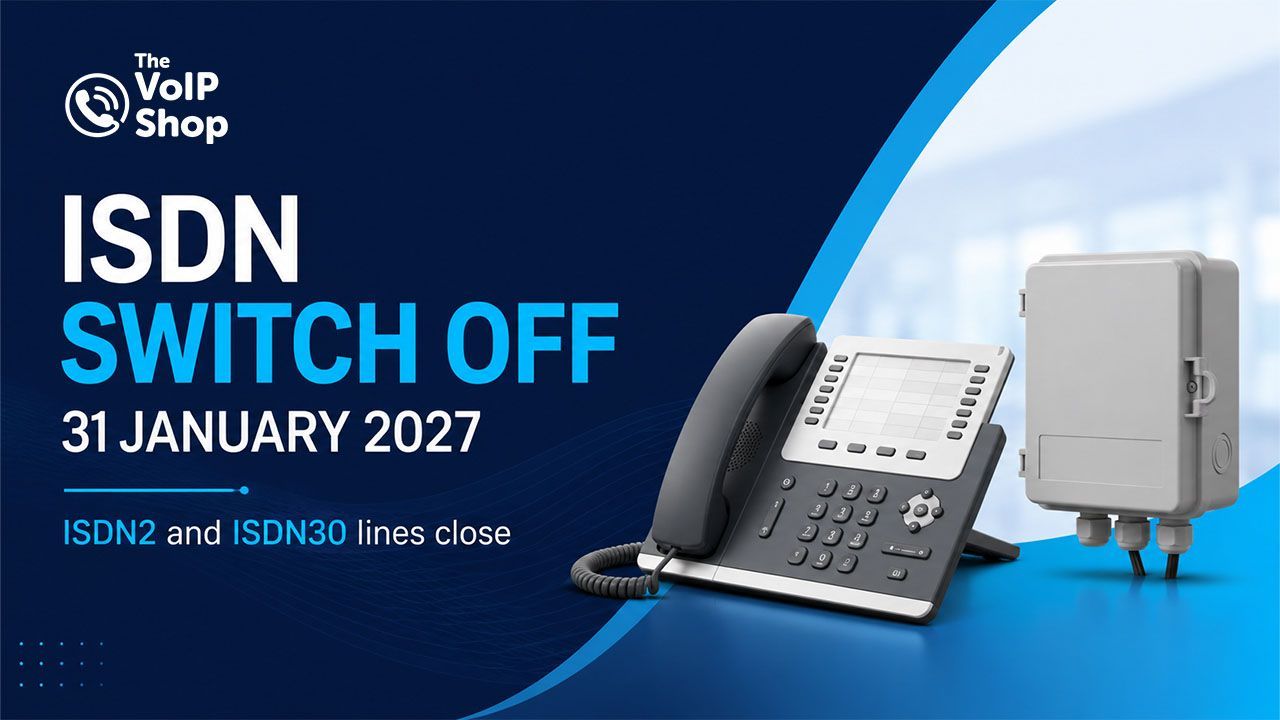
The UK's Public Switched Telephone Network (PSTN) is being retired by 2027. All traditional analogue and ISDN phone lines will stop working. Every UK business will need to move to an internet-based phone system before that deadline.
If you're still running an older on-premise system that relies on traditional phone lines, the PSTN switch-off means you'll need to upgrade or replace it regardless. Moving to a cloud PBX now means you're future-proofed and won't face a rushed migration later.
For businesses already considering a VoIP phone system, the switch-off adds urgency to the decision.
Do You Have the Right Internet Connection for Cloud PBX?
A cloud PBX relies on a stable internet connection. For most UK businesses, a standard business broadband package with speeds of 25Mbps or above is sufficient for clear call quality.
What matters most is consistency: low latency and minimal packet loss. If your business handles a high volume of calls or runs other bandwidth-heavy applications, a dedicated leased line can provide guaranteed performance.
Before switching, it's worth checking your current connection and speaking to your provider about whether an upgrade would help.
Talk to The VoIP Shop About Your Next Phone System
Choosing between cloud PBX and on-premise PBX doesn't have to be complicated. Whether you're replacing an ageing system, preparing for the PSTN switch-off, or setting up communications for a growing team, The VoIP Shop can help you work out the right fit. With 15+ years of UK telecom experience, 24/7 UK-based support, and a free consultation to review your needs, the team takes care of the technical details so you can focus on running your business.
FAQs
What is the main difference between cloud PBX and on-premise PBX?
A cloud PBX is hosted and managed by an external provider over the internet. An on-premise PBX is installed physically at your business location and managed by your own IT team. Cloud PBX requires little upfront investment, while on-premise PBX demands significant capital expenditure on hardware and installation.
Is cloud PBX cheaper than on-premise PBX for small businesses?
For most small businesses, yes. Cloud PBX charges a predictable monthly fee per user with no hardware to buy or maintain. On-premise PBX involves large upfront costs plus ongoing expenses for IT support, maintenance contracts, and eventual hardware replacement every five to seven years.
Can I keep my existing phone numbers if I switch to cloud PBX?
Yes. Number porting allows you to transfer your existing business phone numbers to a cloud PBX provider. The process typically takes a few days to a few weeks, and you can continue receiving calls on your old system until the transfer is complete.
How does cloud PBX handle call quality and reliability?
Cloud PBX providers use multiple data centres with built-in redundancy. If one centre experiences an issue, calls are automatically rerouted through another. Most systems also offer failover to mobile devices, so your team stays reachable even during an office internet outage.
Will the PSTN switch-off affect my on-premise PBX?
If your on-premise PBX relies on traditional analogue or ISDN lines, yes. The UK PSTN is being retired by 2027, so you will need to move to an internet-based system. Migrating to a cloud PBX now avoids a last-minute transition and ensures your business is prepared.
Do I need special internet to run a cloud PBX?
A reliable business broadband connection with speeds of 25Mbps or above is typically sufficient. Consistent performance matters more than raw speed. Businesses with high call volumes may benefit from a dedicated leased line for guaranteed bandwidth and lower latency.