When Are Landlines Being Phased Out in the UK?
UK landlines are being phased out as part of the PSTN switch off, with the old analogue phone network closing by January 2027. Most homes and businesses will move to digital phone services that use a broadband connection for calls.
After helping more than 1,000 UK businesses move from older phone lines to modern systems, we built this guide based on the questions firms ask most and the issues we solve daily.
20+ years in UK Telecom Last updated: 07th September 2026

Are Landlines Being Phased Out in the UK?
(Quick Answer)
Yes, landline telephone service in the UK will be phased out completely by January 2027. The traditional copper wire contact of the telephone companies that provide service to residents will replace their telephone infrastructure (OpenReach), which has been confirmed to be completed by January 2027.
This means all UK-based analogue phone lines will be converted to a digital voice service that uses a high-speed internet network to transmit calls instead of the traditional copper wire that is being phased out. The transition affects every landline provider and company in the UK.
The change has already begun in many areas, with some regions having switched over earlier as part of pilot programs. By January 2027, all remaining areas will complete the migration to digital phone service.
When Will Landlines Be Switched Off Across the UK?
The official date
when landlines will be phased out
is
January 2027. However, the transition is scheduled in stages:
UK Landline Switch-Off Timeline:
- 2020-2023: Initial pilot programmes and early adopter locations migrating to the new digital VoIP technology.
- 2023-2025: Accelerated rollout across major cities and towns
- 2025-2026 (Current Phase): Mass migration, landline to VoIP transition of remaining customers
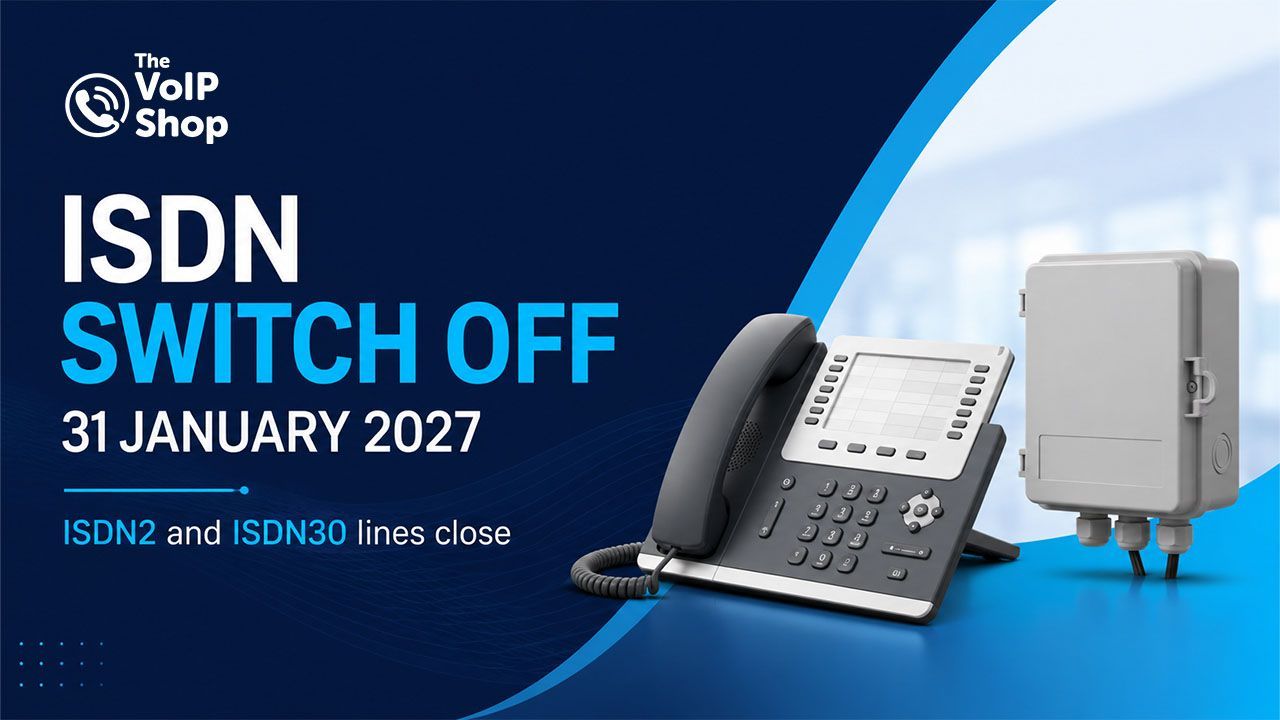
- January 2027: Final PSTN switch-off deadline, all analogue phone lines will cease to function
The postcodes for landlines being phased out in the UK vary slightly, but all areas must complete the transition by the deadline, January 2027. Many businesses may have already been contacted by their provider about switching earlier.
It's important to note that when will landlines be phased out UK-wide, the change is mandatory, not optional. Even if you haven't been contacted yet by your provider, you will need to switch to a digital system before the deadline. Either you can contact your existing provider or get in touch with a new VoIP Provider in the UK.
BT customers can check when is BT going digital in their area by contacting customer service or checking their online account. Most other landline providers offer similar tools or customer support lines to verify switch-off dates for specific postcodes.
The landline phone switch-off timeline has been carefully planned to minimise disruption, with vulnerable customers and those relying on telecare devices prioritised for early communication and support.
Why
Are Landlines Being Phased Out?
Understanding why are landlines being phased out helps explain why this change is necessary for businesses and households.
The PSTN network has been in use for over a century and is now outdated, expensive to maintain, and increasingly unreliable. The copper infrastructure is deteriorating, and sourcing replacement parts for ageing exchanges has become difficult. Engineers with the specialist knowledge to maintain these systems are retiring, and younger technicians are trained exclusively on modern digital systems.
The UK communications regulator, Ofcom, supports the transition to fibre broadband and VoIP (Voice over Internet Protocol) technology due to their superior call quality, increased reliability and a greater range of features in comparison to traditional phone lines. These digital voice services additionally provide numerous advanced features such as voicemail-to-email and call-forwarding to mobile devices, along with integration with current technology used for communication.
The
British government has also provided its approval and support for this upgrade as part of its national initiative to provide gigabit-capable broadband access to all homes and businesses throughout the UK. This effort to digitise telecommunications is a component of the UK's larger plan to modernise its telecommunications infrastructures and to continue increasing its ability to compete in an evolving, globally connected society.
Finally, having two systems (one for phone calls, one for the internet) is costly and operationally inefficient. By combining these services onto a single
fibre broadband network, businesses will incur lower operational costs and will have more resources for developing innovations and improving their networks.
What Will Replace Traditional Landline Phones?
So, what will replace landline phones in the UK? Digital landline services are provided through VoIP technology. VoIP technology uses the internet to transmit calls over a consumer's high-speed internet (broadband) connection instead of physical copper wiring. These
unified communications solutions can also provide businesses with additional calling and collaboration features.
An
internet phone service
will continue to operate like your current landline. When someone calls, your phone will ring. You will still be able to make outgoing calls in the same manner that you do now; however, when you make calls, the call travels as digitised data through your router as opposed to travelling through physical copper wiring.
Digital Voice Service companies usually provide:
- Your existing telephone number (quickly Ported onto the Digital Voice System)
- A compatible digital phone or adapter for your existing handset
- Enhanced call quality with less interference and crackling
- Advanced features like voicemail transcription and call screening
- Integration with mobile apps for making calls from your smartphone
Many providers offer dedicated digital phone service packages that include everything you need. Some supply a free adapter that plugs into your router, allowing you to use your existing cordless or corded phone. Others provide new handsets designed specifically for VoIP systems.
At The VoIP Shop, we specialise in helping customers transition smoothly to digital landline solutions. Our VoIP Specialists have over 15 years of experience matching the right technology to your specific needs, whether you're a small business, or organisation with complex requirements.
For businesses, VoIP phone systems offer greater benefits, including multi-line capability, call recording, auto-attendants, and seamless integration with CRM software.
Will My Landline Work
Without Internet?
The most frequently asked question is: Will my landline work without internet? The answer is: No! After the completion of the PSTN switch-off, your landline phone will only work with an active broadband connection.
Traditionally, analogue phone lines used copper wires to receive their electrical supply, and therefore, they would operate during a power outage. In terms of digital voice services, however, they use the router for both voice service and internet access.
Broadband Required:
If you do not have broadband at home when you must switch an analogue phone over to digital services, you must obtain broadband service before the date your phone application switches over. BT and other internet providers have packages designed specifically for customers interested in using only a phone service, at lower prices; these packages include a minimal amount of broadband service.
For customers in areas where fibre broadband isn't yet available, providers offer solutions using mobile 4G or 5G technology to deliver both internet connectivity and phone service. These wireless solutions ensure that even rural properties can access digital phone service.
Power cut considerations:
During a power outage, your digital landline won't work unless you have a backup power source. Most providers offer backup battery units that plug into your router and provide 1-2 hours of phone service during blackouts. For longer-lasting backup, you can purchase extended battery solutions or uninterruptible power supplies (UPS).
It's crucial to have a backup communication method, such as a charged mobile phone, in case of emergencies during power cuts. Ofcom requires providers to inform customers about power cut vulnerabilities and offer backup solutions to those who rely on their landline for emergency calls.
How Will the Change Affect
UK Households?
The landline phase out will impact different groups in various ways. Understanding how many homes still have landlines UK-wide helps illustrate the scale of this transition; approximately 12 million households still use landline phones regularly.
Many people ask: Do I need a landline phone UK? Or do I need a home phone at all? While mobile phones have reduced reliance on fixed-line telephony, many households still depend on landlines for:
- Better reception in areas with poor mobile signal
- Lower call costs for long conversations
- Emergency calls with automatic location identification
- Professional business presence with a fixed geographic number
- Peace of mind for older family members who prefer familiar technology
- Impact on Elderly Users
Older people represent a significant portion of regular landline users. Many elderly individuals feel uncomfortable with mobile technology and rely on their simple corded phone. The question of whether landlines are being discontinued has caused anxiety in this demographic.
Elderly users should be reassured that their phone will work similarly after the switch; the same handset may continue to function with a simple adapter, and their familiar phone number remains unchanged.
- Telecare and Health Alarms
Personal telecare devices, including fall alarms, medication reminders, and emergency pendants, often rely on traditional phone lines. The telecare impact of the switch-off is significant because many older models won't work with digital voice services.
If you or a family member uses telecare equipment, contact your provider immediately to:
- Check if your device is compatible with digital phone lines
- Request a free upgrade if needed
- Ensure backup power solutions are in place
- Test the system thoroughly after installation
Healthcare providers, local councils, and telecare companies are working with telecommunications providers to ensure vulnerable users aren't left without critical support services. Ofcom has mandated that extra protections be in place for these customers.
- Security Systems
Many home and business security systems use landlines to communicate with monitoring centres. Burglar alarms, fire alarms, and CCTV systems may need reconfiguration or replacement to work with VoIP technology.
Contact your security provider well before the switch-off deadline to:
- Verify compatibility with digital voice services
- Schedule any necessary upgrades
- Test alarm signals after migration
- Update emergency contact procedures
Some older alarm systems require complete replacement, while others need only firmware updates or minor hardware changes.
- Power Cuts
As mentioned earlier,
digital landline services don't work during power outages without battery backup. This is particularly important for:
- Rural areas are prone to power disruptions
- Severe weather zones with frequent outages
- Customers who rely solely on landlines for emergency communication
- Households with vulnerable members who may need to call for help
The service providers offer mostly free or subsidised backup battery units to eligible customers. These typically provide 1-2 hours of phone service during power cuts, enough time for emergency calls but not extended conversations.
For comprehensive protection, consider:
- Extended battery backup systems (4-8 hours)
- Keeping a mobile phone charged as a backup
- Registering vulnerable household members with your provider
- Understanding your local provider's power cut protocols
What Happens to My Landline
in 2026?
What will happen to my landline in 2026? You will be receiving notifications from your provider shortly. Your provider is required by law to provide sufficient notice before changing you from an analogue telephone (PSTN) to a digital voice service. Your provider may contact you via phone, email, or letter advising you of the forthcoming changes to your phone service
Here are some examples of what to expect:
- Notification: You will receive a phone call, email or letter from your landline provider notifying you about the upcoming changes to your phone service
- Information Package: You will be provided with information regarding the type of equipment you will receive and the date the change will take place.
- Rugged Equipment Delivery: You will receive the new hardware that is necessary for you to utilise the new phone service via postal delivery.
- Installation Guide: Instructions on how to connect to your digital phone service, as well as options for booking an Engineer for installation.
- Transition Date: The date on which you will lose your analogue phone line, and the activation of your new digital service will take place.
- Support Period: Your provider will offer you access to customer service representatives who can assist with troubleshooting any difficulties you may experience.
Important checklist for 2026:
- Confirm your switch-over date with your provider
- Check if you need broadband (if you don't already have it)
- Test any connected devices (alarms, telecare, card machines)
- Update your contact details with your provider
- Request a backup battery unit if you're vulnerable or in a rural area
- Arrange engineer installation if you're not confident setting up the equipment
- Keep your mobile phone charged as a backup
- Notify family members of the change
Can I keep my landline after 2026? Yes, your phone service continues, just delivered through digital voice technology instead of copper wires. Your number stays the same, and for most users, the experience is virtually identical.
Are Landline Phones Being Phased Out Completely?
Let's clarify a common misconception: are landline phones being phased out as a concept? No, only the underlying technology is changing.
You can still have a home phone with a geographic number (like 020 for London or 0161 for Manchester). You can still receive and make calls exactly as you did before. The phone might even look and feel identical.
What's changing is how the call travels from your home to the person you're calling. Instead of using century-old copper wires and analogue switches, your call is converted to digital data and transmitted over modern fibre broadband networks.
Are landline phones being phased out in terms of the physical handsets? No, many people continue using their existing corded or cordless phones with a simple adapter that plugs into the router. Others receive new digital voice-compatible handsets from their provider.
The confusion often arises from the term "landline" itself. Traditionally, this meant a physical line into your home. In the modern context, it refers to a fixed telephone service associated with a physical address, regardless of the underlying technology.
Getting rid of landline phone service entirely is an option if you rely solely on mobile, but many households choose to keep their home phone service even after switching to digital voice because it offers better call quality, costs less for long calls, and provides a stable presence for business or family contacts.
Can I Keep My Landline Number After 2025?
Absolutely. One of the most important aspects of the transition is that you keep your existing telephone number.
Number porting is the technical term for transferring your number from the old PSTN system to the new digital voice service. This happens automatically during the migration process; you don't need to take any action, and there's no interruption to your service.
Your provider handles the
number porting
behind the scenes. When your switch-over date arrives:
- Your old number stops working on the copper network
- The same number instantly activates on the digital landline system
- All incoming calls are automatically routed to your new service
- Callers notice no difference; your number remains the same
This applies whether you're staying with your current provider or switching to a new one. If you decide to change landline providers during the transition, inform them that you want to keep your number; they'll manage the porting process.
For businesses, maintaining your established phone number is crucial for customer recognition and marketing continuity. The good news is that
VoIP
systems often offer enhanced number management, including:
- Multiple numbers on the same line
- Flexible routing to mobile phones or other locations
- Time-based forwarding (office hours vs. evenings)
- Geographic numbers for multiple locations
At The VoIP Shop, we ensure seamless number porting for all our customers, protecting your established communication presence while upgrading you to modern digital phone service technology.
How to Prepare
for the UK PSTN Switch-Off (Step-by-Step)
Preparing for the PSTN switch-off doesn't have to be stressful. We've developed a tried-and-tested 6-step method that ensures a smooth transition to digital voice services.
Our 6-Step VoIP Migration Method:
At The VoIP Shop, we've developed a proven methodology to ensure seamless transitions from PSTN/ISDN to Digital Voice. Our structured approach eliminates guesswork and ensures successful outcomes.
Step 1: Discovery & Consultation involves assessing your current infrastructure, understanding your business requirements, and identifying all affected systems. We conduct thorough site surveys to ensure nothing is overlooked.
Step 2: Solution Design sees our experts designing a tailored VoIP solution matching your operational needs and budget. We consider not just your current requirements but anticipated growth and changing needs.
Step 3: Infrastructure Preparation ensures your network and internet connectivity meet requirements for optimal voice quality. This may involve broadband upgrades or network configuration changes.
Step 4: Installation & Configuration includes professional installation of your new cloud phone system, including all devices and integrations with existing business applications.
Step 5: Testing & Training provides comprehensive testing of all features, plus staff training to maximise your investment and ensure everyone feels confident using the new system.
Step 6: Go-Live & Support ensures a smooth transition to your new system with ongoing technical support and monitoring. We don't disappear after installation; our team remains available to address any concerns.
Watch: moving off an analogue line step by step
What replaces a traditional landline, what to check before switching, and how numbers are kept when the copper network is retired.
Is Your Business Ready for the UK Big Switch Off, from The VoIP Shop on YouTube
Frequently Asked Questions about Landline Switch-Off
What is replacing landline phones?
Traditional analogue phone lines are being replaced by digital voice services that use VoIP (Voice over Internet Protocol) technology. Your calls will travel over fibre broadband internet connections instead of copper wires, offering better quality and more features while maintaining your familiar phone number and calling experience.
Will landlines be phased out?
Yes. The PSTN copper wire network is being switched off and replaced with digital systems. However, you can still have a home phone service; it will just use modern internet phone service technology instead of traditional copper lines. The final deadline for the UK PSTN switch-off is January 2027. However, migrations are happening now in stages, with different areas switching at different times throughout 2025 and 2026. Contact your provider to find out your specific switch-over date.
What is landline replacement technology?
Landline replacement technology is VoIP (Voice over Internet Protocol), which converts your voice into digital data and transmits it over broadband internet. Most users receive either a digital phone adapter that works with their existing handset or a new digital voice-compatible phone from their provider. The service works similarly to traditional landlines but with improved call quality and additional features.
Can I get rid of my landline phone?
If you're asking about getting rid of landline phone service entirely, yes, but consider the implications. Many households & businesses still benefit from landlines for better reception, lower costs for long calls, emergency services, and compatibility with alarm systems. You can discontinue service if you rely solely on mobile, but many people choose to keep their digital landline even after the switch for reliability and convenience.
How do I keep my landline number?
Your landline number automatically transfers during the migration to digital voice services through a process called number porting. Your provider handles this; you don't need to take any action. If you're switching providers during the transition, inform your new provider that you want to keep your existing number, and they'll arrange the transfer.
Will my old phone work with digital voice?
Most corded and cordless phones work with digital voice services using an adapter that plugs into your router. Some very old phones or specialist equipment may not be compatible. Your provider will supply the necessary equipment and inform you if your current phone won't work with their digital phone service.
What happens if there's a power cut?
Unlike traditional analogue phone lines that received power through copper wires, digital voice services require mains electricity. During power cuts, your phone won't work unless you have a backup battery unit. Most providers offer these to eligible customers, typically providing 1-2 hours of emergency calling capability. Always keep a charged mobile phone as backup.
Do I need broadband for a landline now?
Yes, after the PSTN switch-off, your phone service will require broadband connectivity. If you don't currently have broadband, your provider will offer packages designed for customers who only want phone service, with minimal data usage at a low cost. In areas without traditional broadband, 4G or 5G wireless solutions are available.
Will my telecare alarm work after the switch?
Many older telecare devices are not compatible with digital voice services and will need upgrading. Contact your telecare provider or local council immediately to check compatibility and arrange a free replacement if necessary. This is crucial; don't wait until the last minute, as vulnerable customers are prioritised for early transitions.
The VoIP Shop is your trusted partner for PSTN to VoIP migration. With 15+ years of telecommunications expertise and over 10,000 successful UK business installations, we ensure your transition to digital communications is smooth, cost-effective, and future-proof.
Need Help Switching to a Digital Phone Line?
Navigating the transition from traditional analogue phone lines to digital voice services can feel overwhelming, especially with conflicting information and technical jargon. That's where The VoIP Shop comes in.
Our VoIP specialists have over 15 years of experience helping UK businesses transition smoothly to modern VoIP phone systems. We don't just sell equipment; we provide expert guidance, honest recommendations, and ongoing support to ensure your phone service works perfectly for your specific needs.
Why choose The VoIP Shop for your digital phone transition?
- Expert consultation: We assess your current setup and recommend the right solution
- All major brands: Access to leading
VoIP equipment and service providers
- Transparent pricing: No hidden costs or surprises
- Professional installation: Engineer support when you need it
- Ongoing support: UK-based technical help whenever you need assistance
- Business expertise: Specialist knowledge of business communication needs
Whether you're a small-sized business owner looking for a simple digital landline replacement or a large-sized business needing a comprehensive VoIP phone system with advanced features, we can help.
Download our free guide: The Ultimate Guide to BT Landline Switch Off January 2027; written by our specialists, this comprehensive resource covers everything you need to know about the transition, common pitfalls to avoid, and step-by-step instructions for a seamless migration.
Contact us today to speak with a VoIP specialist who can answer your questions and help you prepare for the January 2027 deadline. Visit The VoIP Shop or call our team for personalised guidance.
The landlines phased out deadline is approaching fast; don't wait until the last minute. Start planning your transition today to ensure uninterrupted phone service and take advantage of the superior features and reliability that digital phone service technology offers.