PSTN vs PBX: Understanding the Difference for Your Business
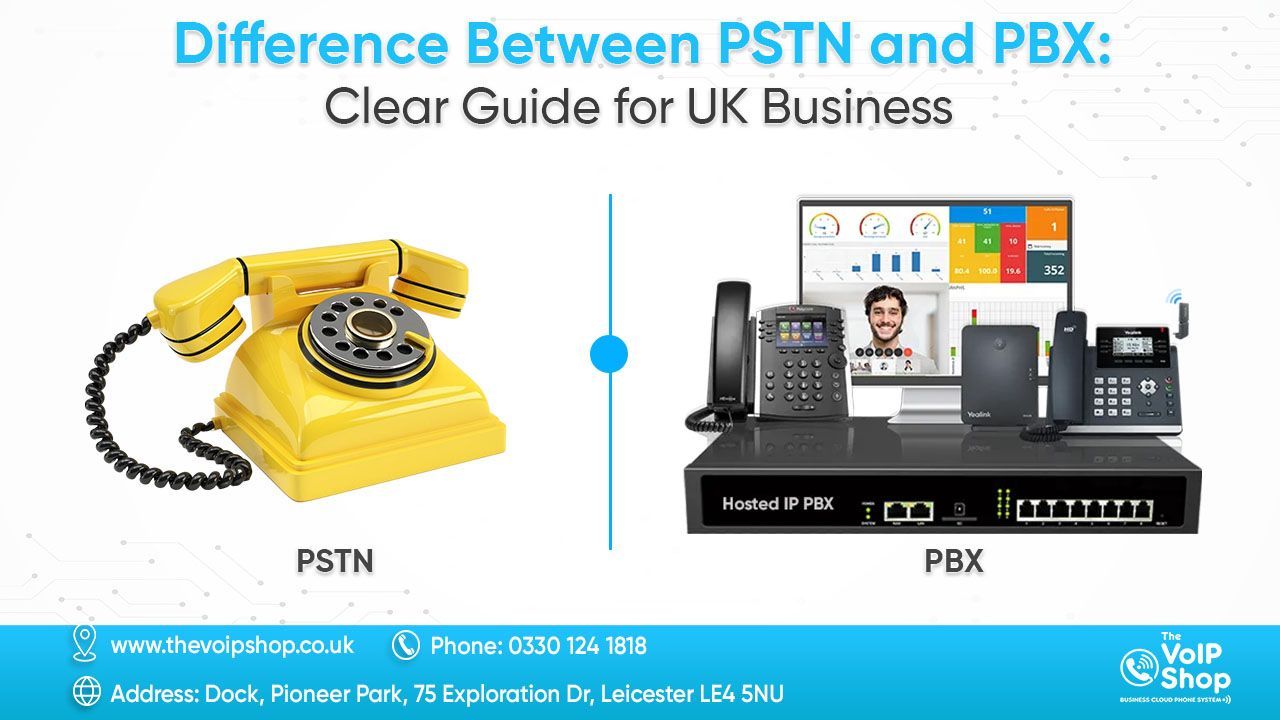
PSTN is the long-standing public phone network used for traditional landline calls. PBX is a private phone system used inside a business to manage internal extensions, call routing, and outside calls through PSTN or VoIP. PSTN offers basic calling, while PBX gives greater control, better structure, and modern features for growing teams.
After helping over 1,000 businesses across the UK move from older phone lines to modern systems, we wrote this guide based on the issues we see most and the questions firms ask every day.
20+ years in UK Telecom | Last updated: December 2025
Key Takeaway
- PSTN uses copper lines and has limited features.
- PBX manages internal extensions, routing, menus, and group calls.
- PBX works well with VoIP and supports hybrid teams.
- PSTN will be withdrawn in the UK, so businesses need a new path.
- Hosted PBX is a simple upgrade for small and mid-sized firms.
PSTN vs PBX Comparison Table
| Feature | PSTN | PBX |
|---|---|---|
| System type | Public network | Business phone system |
| Call routing | Very limited | FernanMenus, queues, extensionsdez |
| Scalability | Slow and costly | Quick and affordable |
| Remote working | Not supported | Works anywhere with VoIP |
| Cost | Higher long-term | Lower long-term |
| Growth suitability | Low | High |
Not sure which option suits your team?
Talk to our support team — available 24/7 across the UK.
What Is PSTN?
PSTN, or the Public Switched Telephone Network, is the traditional phone network used for landline call connections. It relies on roadside cabinets, copper wiring, and exchange centres.
How PSTN Works?
Calls move across copper lines using electrical signals. The network routes each call through switching points until it reaches the final number.
Who Still Uses PSTN?
Older offices, small shops, and buildings are using legacy hardware such as old card machines or alarm systems.
Benefits of PSTN
- ➡️ Simple to understand
- ➡️ Works without internet
- ➡️ Steady quality with standard use
Limitations of PSTN
- ⚠️ Lacks modern features
- ⚠️ Hard to scale
- ⚠️ High cost for extra lines
- ⚠️ Cannot support remote work
- ⚠️ Will be withdrawn during the UK switch-off
⚠ The PSTN withdrawal is closer than many firms think.
Get ahead of service changes and avoid last-minute disruption
What Is PBX?
PBX, or Private Branch Exchange, is a business phone system that manages call flow inside an organisation. It controls how calls are sent to staff, departments, and external numbers.
How PBX Works?
A PBX system directs calls between internal extensions and manages outside calls through PSTN or VoIP. It can route calls to ring groups, mobiles, or voicemail.
Types of PBX Systems
Traditional PBX
Physical equipment installed onsite. Works with PSTN lines but needs maintenance.
Hosted PBX (Cloud PBX)
Runs through VoIP. No onsite equipment. Works on mobiles, desk phones, or computers.
Hybrid PBX
A mix of onsite and cloud features. Ideal for slow transitions.
Benefits of PBX
- ➡️ Internal extensions
- ➡️ Call menus to guide callers
- ➡️ Ring groups for departments
- ➡️ Remote access with VoIP
- ➡️ Lower long-term cost
- ➡️ Scales quickly
Limitations of PSTN
- ⚠️ Older equipment can be costly to maintain
- ⚠️ Cloud PBX depends on good internet speeds
PSTN
Physical equipment installed onsite. Works with PSTN lines but needs maintenance.
PBX
Manages internal call flow.
VoIP
Runs calls through internet connections, giving access to mobile apps, softphones, recordings, and reporting.
Why PSTN Matters Less Today (UK Switch-Off)
The UK is retiring all copper lines. This means PSTN lines and older phone devices will no longer function.
What does this mean for Your Firm?
- All calls must move to digital or VoIP
- No new PSTN service additions
- Remote and hybrid staff will rely on digital systems
- Modern systems offer more control at lower cost
Why PBX or VoIP Is Now the Best Fit?
PBX with VoIP gives call management, routing tools, and flexible access from many locations.
Don't wait until the last moment.
How to Choose Between PSTN and PBX?
Team Size
Growing teams need PBX features.
Call Volume
High traffic requires queues and routing.
Remote Access
PBX with VoIP supports every location.
Growth Plans
PBX grows instantly without hardware.
Costs
PBX reduces long-term running costs.
Customer Support Needs
Teams handling daily customer queries benefit from more control.
Moving from PSTN to PBX or VoIP: Simple Steps
- Review your phone numbers.
- Pick hosted PBX or hybrid PBX.
- Move numbers through a porting process.
- Test the new system.
- Retire PSTN lines once ready.
We make the move simple and safe.
No lost calls. No data loss. No confusion.
Why UK SMEs Prefer Hosted PBX or VoIP Today
- Lower monthly cost
- Works on mobiles, laptops, or desk phones
- Easy setup with no onsite kit
- Better support for remote staff
- Call routing tools that improve customer experience
- Fast scaling without waiting for new lines
How The VoIP Shop Supports Your Move?
Assured supplier on the NHS Advanced Telephony BPF
10+ years serving UK SMEs
24/7 UK-based support
Free refurbished desk phones
Free number porting
Simple onboarding
Dedicated account manager
5-star rating from UK users
Ready to Upgrade Your Phone System?
Let our UK team check your current setup and guide you through your options.
Conclusion
PSTN provides basic calling but does not support the needs of modern businesses. PBX offers structured routing, better team communication, and flexibility for remote work. With the UK phasing out copper lines, PBX and VoIP systems give better value, improved control, and long-term reliability.
Get in touch with our team today to discuss your options and find the right phone system for your business.
FAQ About Difference Between PSTN vs PBX
What is the difference between PSTN and PBX?
PSTN is the public phone network for landline calls. PBX manages internal and external routing inside a business.
Does PBX need PSTN to work?
Traditional PBX can use PSTN lines, but modern PBX systems run through VoIP instead. VoIP removes the need for PSTN.
Is PBX the same as VoIP?
No. PBX manages call flow, while VoIP carries the call over the internet. Many firms use PBX with VoIP.
Can PBX work after the PSTN switch-off?
Yes. Hosted PBX and hybrid PBX systems will continue to work. Only PSTN lines will be removed.
Can I keep my landline number when moving away from PSTN?
Yes. Number porting lets you keep your existing number during the upgrade.
Do I need new phones when switching from PSTN to PBX or VoIP?
Many current desk phones will work. If not, we provide free refurbished Yealink phones to make the move simple.
Which businesses still use PSTN today?
Older offices, small shops, and firms with older alarm or card machines may still use PSTN.
Which businesses benefit most from PBX?
Any team with customer calls, departments, or remote workers. PBX suits firms that need menus, groups, and call routing.
Is PBX cheaper than PSTN?
Yes. PBX lowers running costs because it avoids paying for multiple lines and supports VoIP calling.by avoiding the need to pay for multiple lines and by supporting
How long does it take to switch from PSTN to PBX or VoIP?
Most upgrades complete within a few days, including number porting.
Can PBX run without the internet?
Only traditional PBX with PSTN lines can work offline. Hosted PBX requires internet access.
What happens to fax machines when PSTN shuts down?
Faxing will move to digital fax services or VoIP-supported fax lines.
Which system is best for remote and hybrid teams?
Hosted PBX with VoIP, as calls work on mobiles, laptops, and desk phones.
What is the easiest upgrade path from PSTN?
Hosted PBX offers the simplest move, as it removes hardware needs and supports rapid setup.
Do I need technical knowledge to use PBX or VoIP?
No. Your provider manages the setup, support, and updates for you.