Martyn’s Law VoIP Requirements for UK Businesses
In 2025, the UK government introduced one of the most significant public safety laws in recent years: Martyn’s Law, formally known as the Terrorism (Protection of Premises) Act 2025.
This legislation places new legal responsibilities on organisations that operate publicly accessible buildings, spaces, and events, with a strong focus on preparedness, risk reduction, and the ability to respond effectively during serious incidents.
One area that is proving critical for compliance and often underestimated is emergency communication. For many organisations, this means a clear and unavoidable requirement to review and upgrade their phone systems.
If your premises can reasonably expect 200 or more people to be present at any one time, this blog explains what Martyn’s Law requires, which premises are affected, why traditional systems fail, and how modern VoIP supports compliance.
After helping more than 1,000 UK businesses move from older phone lines to modern systems, we built this guide based on the questions firms ask most and the issues we solve daily.
20+ years in UK Telecom | Last updated: January 2026
Key Takeaways
What Is Martyn’s Law?
Martyn’s Law is named in memory of Martyn Hett, one of the victims of the 2017 Manchester Arena attack. The law aims to improve public safety by ensuring that venues and organisations are better prepared to prevent, respond to, and recover from terrorist incidents and other serious threats.
The Terrorism (Protection of Premises) Act 2025 received Royal Assent in April 2025. However, recognising the scale of change required, the government has confirmed that the law will not be fully enforced until at least Spring 2027.
This creates a defined implementation period, giving organisations time to understand their obligations, conduct assessments, develop procedures, and install or upgrade systems. Importantly, this period is intended for meaningful preparation, not last-minute compliance.
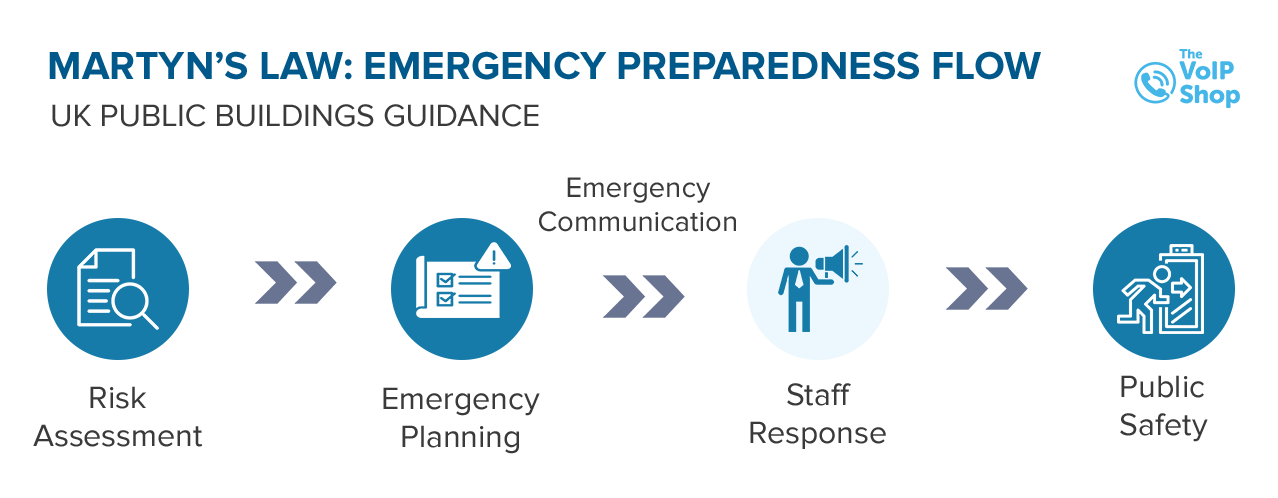
Why Communication Is a Core Requirement Under Martyn’s Law?
Martyn’s Law requires premises within scope to put in place “reasonably practicable” procedures across four key areas:
Risk Assessment
Assess risks and plan emergency responses effectively.
Emergency Plan
Develop comprehensive plans for serious incidents.
Staff Training
Ensure all staff are trained to respond quickly
Clear Communication
Communication is a legal requirement, not optional.
Crucial Insight: While evacuation and lockdown procedures are often discussed, communication underpins all three physical responses. Without a reliable way to communicate, staff may not know an incident is unfolding, occupants may receive conflicting information, and emergency procedures may be ignored.
Which Premises and Sectors Are Affected?
Martyn’s Law applies to publicly accessible premises and events that can reasonably expect 200 or more people to be present at one time.
Capacity Tiers Explained
Standard Tier:
Premises with a capacity of 200 to 799 people.
Enhanced Tier:
Premises with a capacity of 800 or more people, where additional risk assessment and planning requirements apply.
Common Sectors Affected
- Event spaces
- Visitor attractions
- Public and civic buildings
- Shopping centres and retail
- Transport hubs and terminals
- Hotels and conference centres
- Hospitals and healthcare facilities
- Schools, colleges, and universities
Premises below the 200-person threshold are out of scope but are strongly encouraged to adopt proportionate protective measures.
Why Many Existing Phone Systems Are Not Adequate?
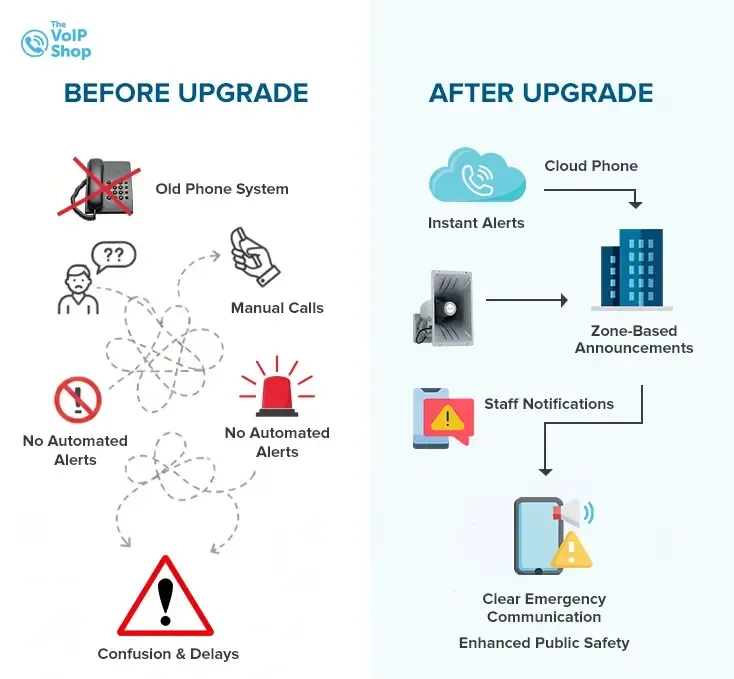
Many organisations still rely on legacy or traditional phone systems that were designed for day-to-day calling, not emergency response.
Common limitations include:
❗No priority handling for emergency calls
❗No support for mass or zone-based alerts
❗No integration with PA systems or speakers
❗No ability to broadcast emergency messages
❗Limited or inaccurate location data for emergency services
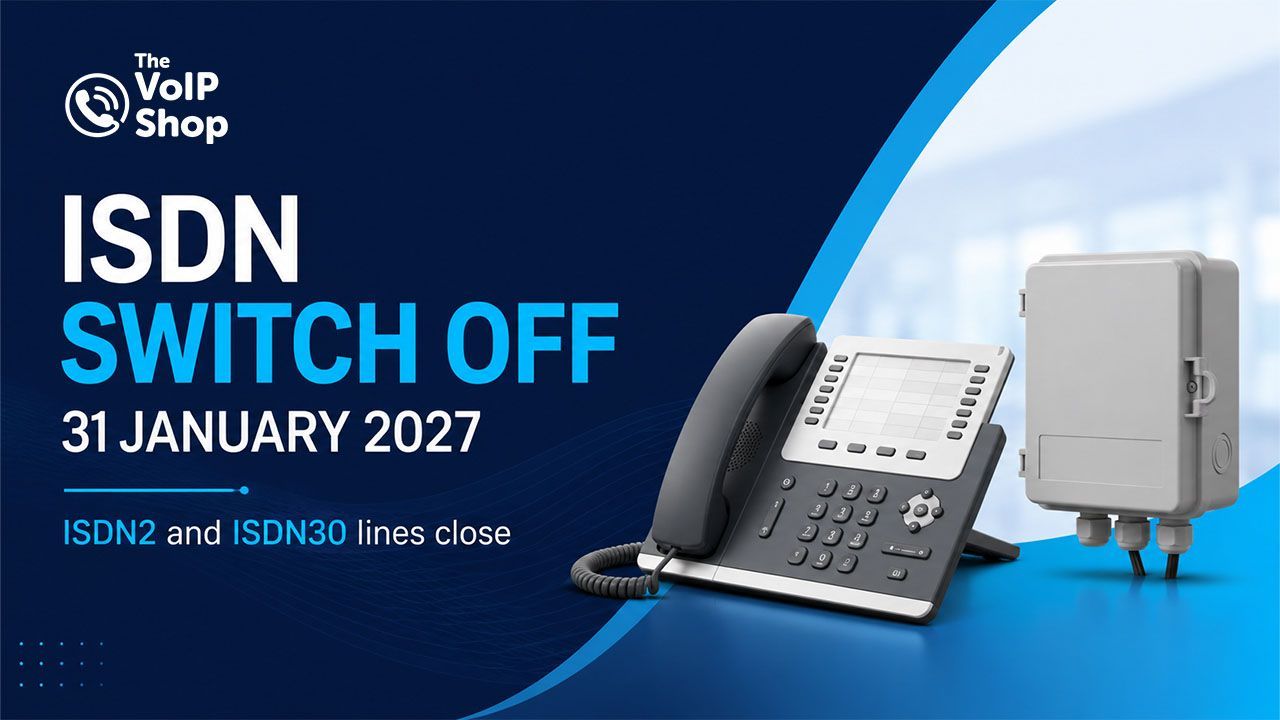
In addition, many older systems rely on ISDN infrastructure, which is being switched off across the UK in 2027. Delays may lead to compliance pressure, forced migration, and increased costs.
Why Cloud-Hosted VoIP Is Becoming the Preferred Solution?
To meet the communication expectations of Martyn’s Law, many organisations are moving to modern cloud-hosted VoIP phone systems. VoIP (Voice over Internet Protocol) systems use internet connectivity rather than traditional phone lines, providing greater flexibility, resilience, and functionality.
Crucially, VoIP platforms are designed to support real-time communication, integration, and automation, all of which are essential in emergency scenarios.
Phone System Features That Support Martyn’s Law Compliance
A VoIP phone system suitable for public buildings should include the following capabilities:
Emergency Plan
The ability to instantly broadcast live or pre-recorded emergency messages across all desk phones, cordless handsets, integrated IP speakers, and selected zones.
Benefit: Ensures instructions like lockdown or evacuation are delivered clearly.
Simple and Fast Activation
Dedicated emergency buttons, short dial codes, and pre-configured triggers.
Benefit: Removes hesitation and complexity at critical moments
Integration With Existing Infrastructure
Modern VoIP systems can integrate with existing PA systems, IP speaker solutions, and security/BMS.
Benefit: Creates a coordinated response rather than isolated alerts.
Reliability and Resilience
Cloud-hosted systems offer built-in redundancy, automatic updates, and high availability independent of local hardware.
Benefit: Emergency communication remains available when needed most.
Compatible Integrated Hardware
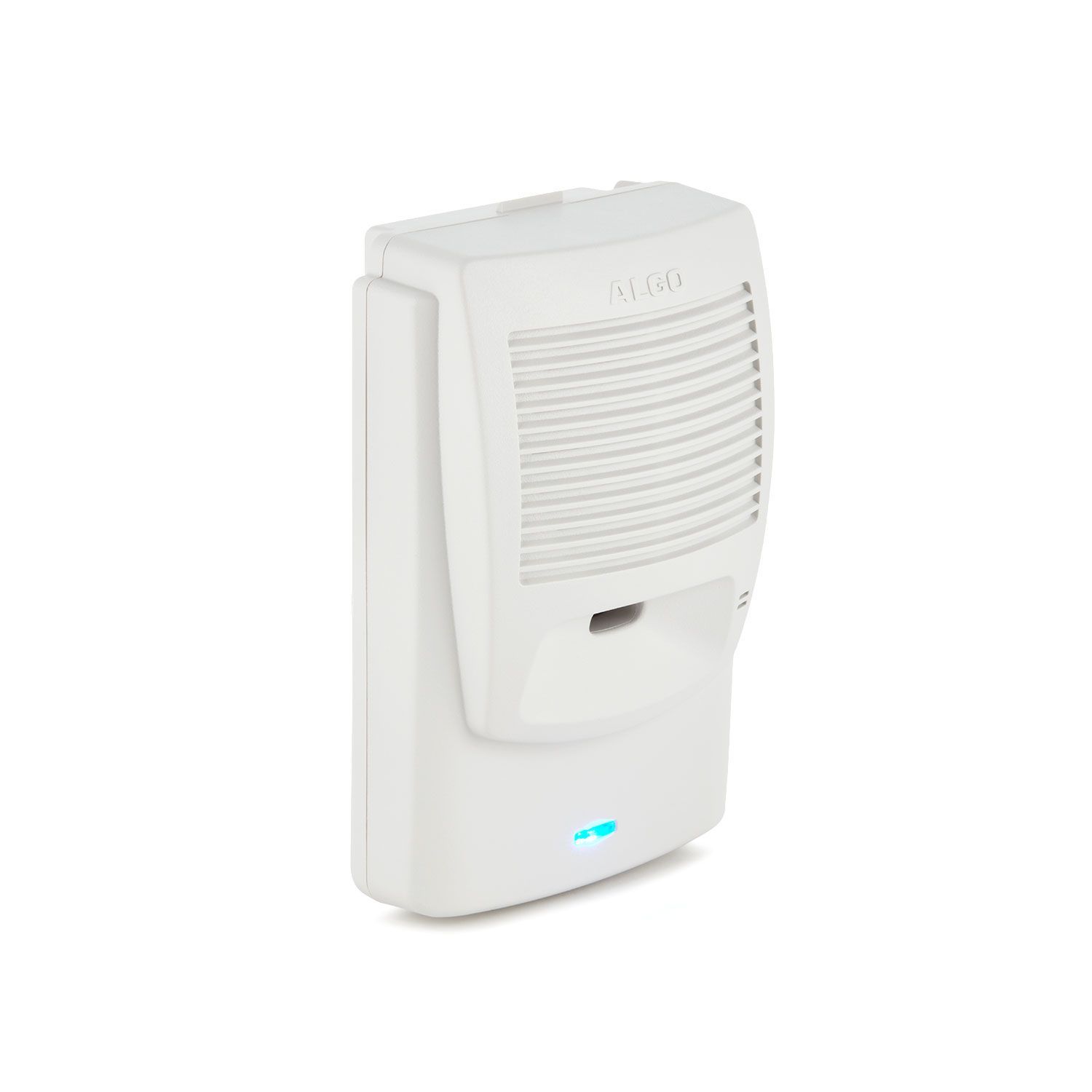
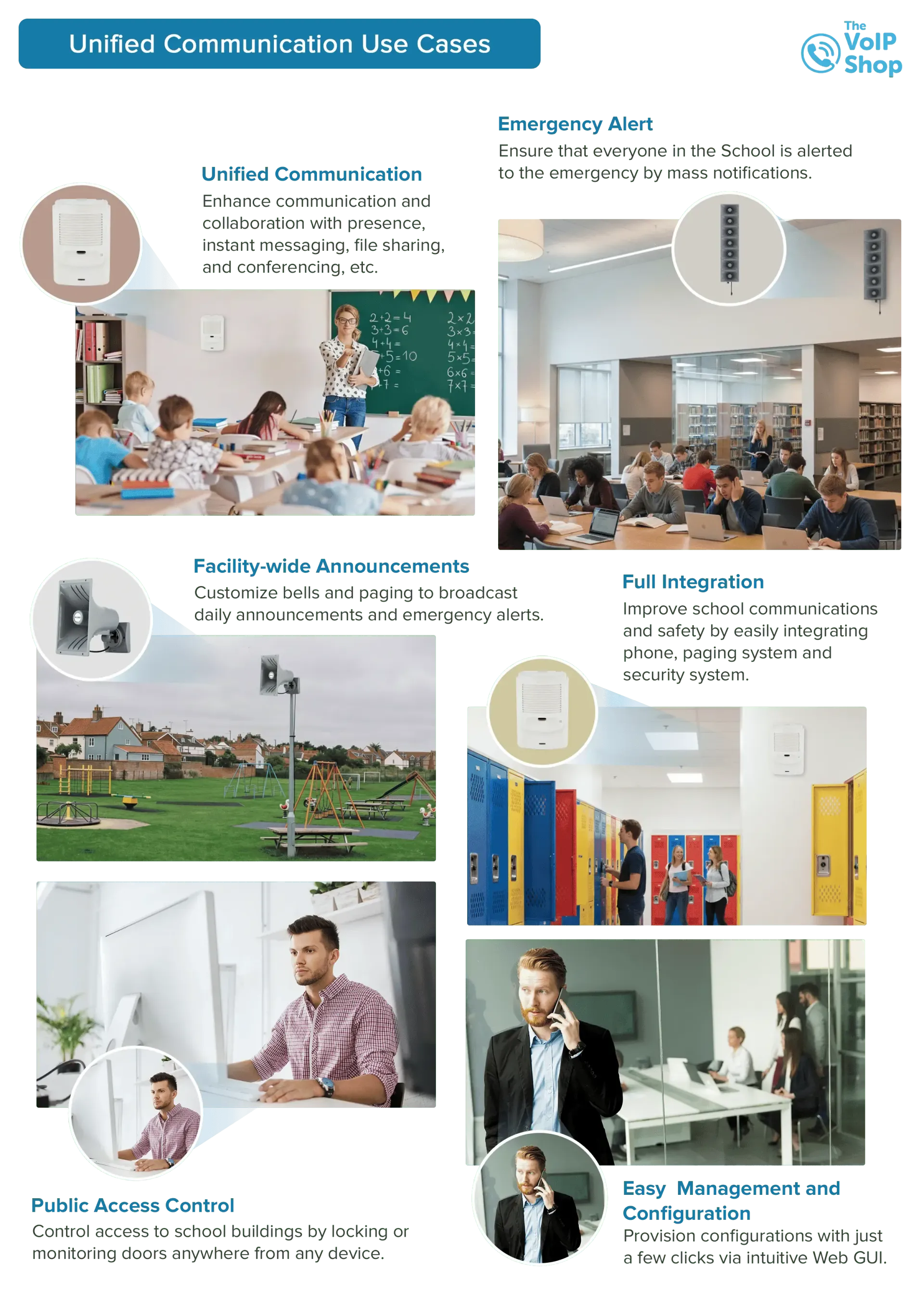
P Speakers for classrooms/offices
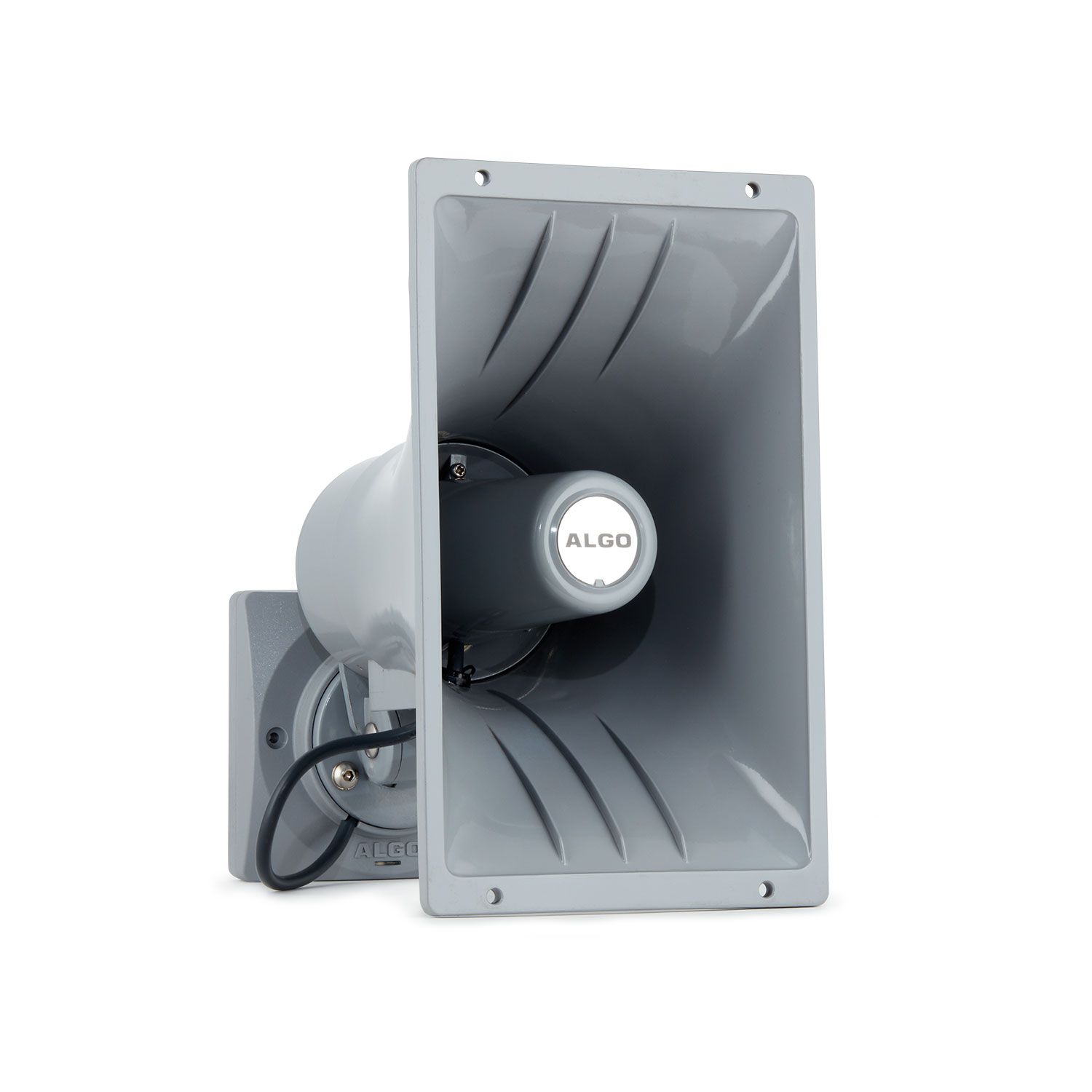
Horns for playgrounds/warehouses

Line Arrays for large halls
The VoIP Shop Solution: Emergency Communication Built In
The VoIP Shop’s Cloud-Hosted VoIP Phone System is designed to support public buildings, venues, and organisations that need reliable emergency communication. The solution operates across two complementary levels.
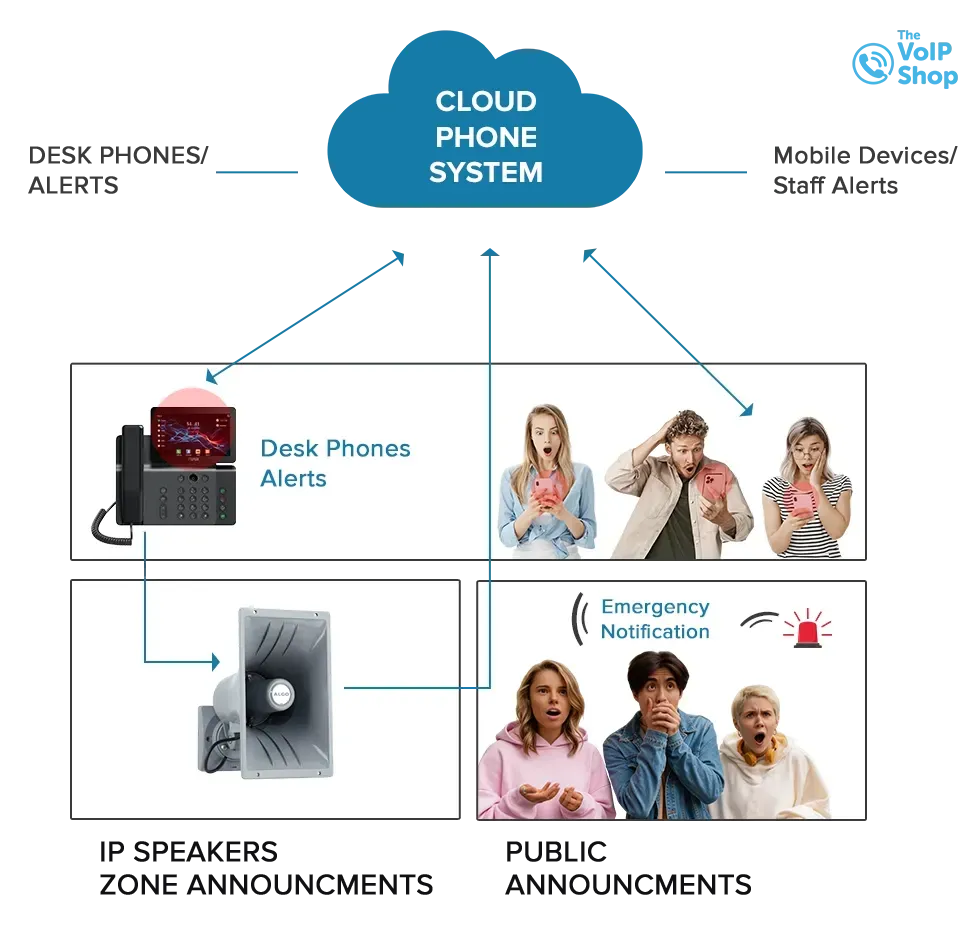
Level 1: Mass Notifications and
Zone-Based Alerts
Using SIP paging integration, The VoIP Shop system enables emergency announcements to be broadcast across your premises via handsets and IP speakers.
- Issue whole-site emergency alerts
- Deliver zone-specific instructions
- Provide audible guidance during incidents
SIP paging and intelligent call routing ensure messages are delivered quickly and accurately.
Level 2: Emergency Call Handling and
Automatic Alerts
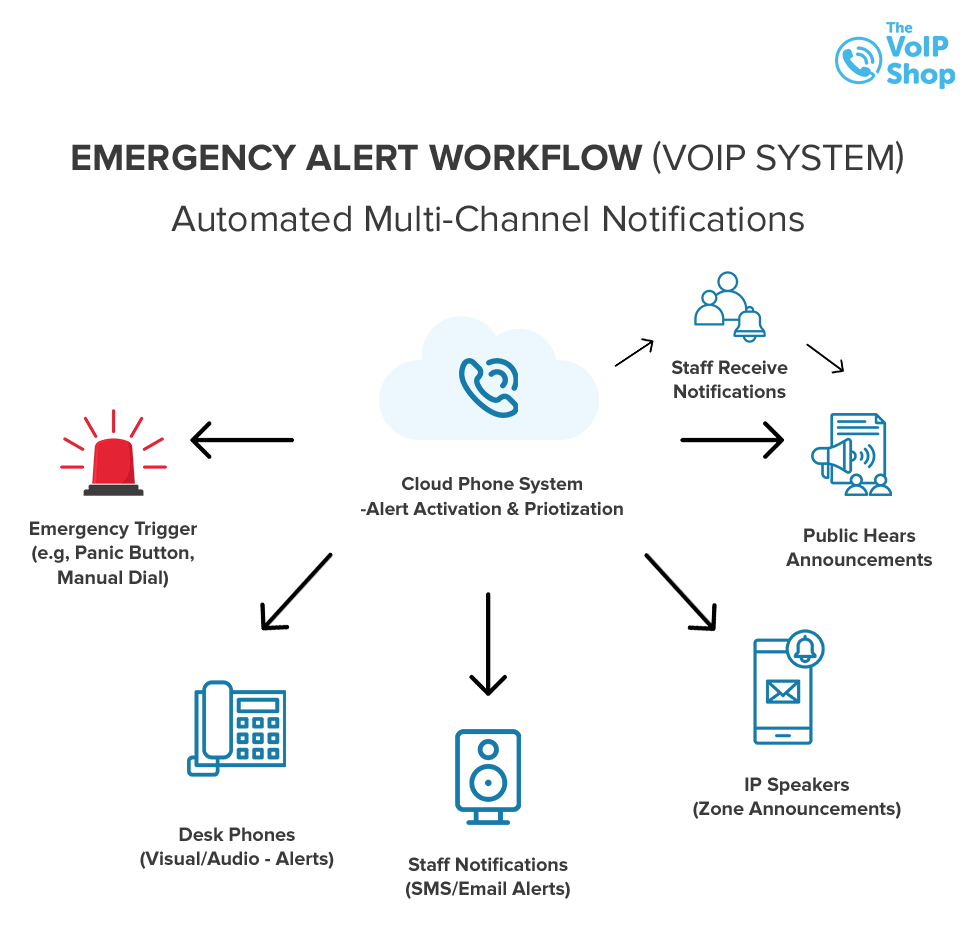
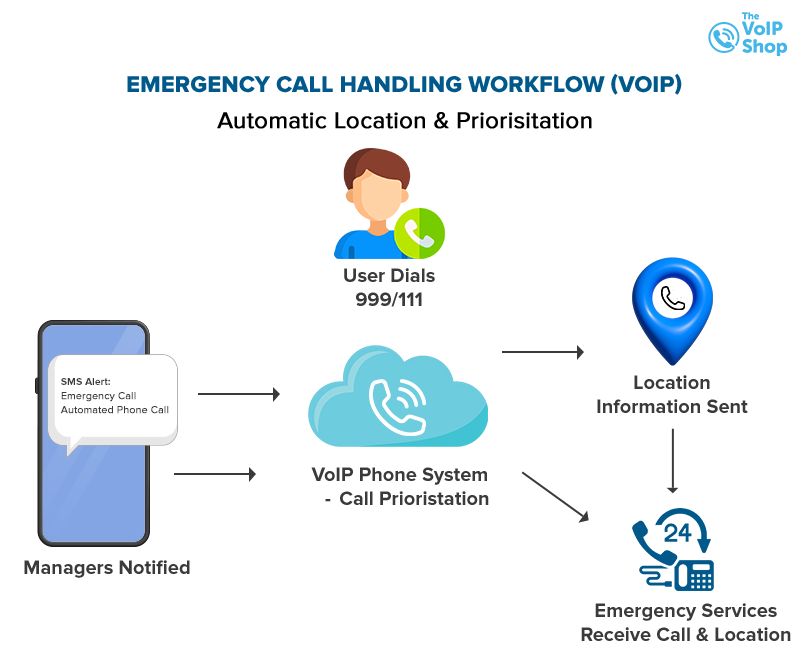
Emergency calls in public environments require special handling and visibility. With The VoIP Shop’s advanced emergency call alert system, any call to an emergency number (e.g., 999 or 111) automatically triggers alerts to designated staff.
Workflow:
- Employee dials emergency number
- System identifies call as emergency
- Automated alerts triggered instantly
- Designated contacts notified
Multi-Channel Alerts
Notifications sent via automated phone calls, SMS, and email.
Custom audio prompts announce who placed the call and from which location.
Enhanced Location Accuracy
Supports E911/E112 with ELINs and ERLs.
Crucial for large sites, wireless users, and complex environments.
Calls Always Get Through
Emergency calls use designated trunks and override time conditions.
If lines are busy, non-critical calls can be terminated to free up capacity.
Simple Management Interface
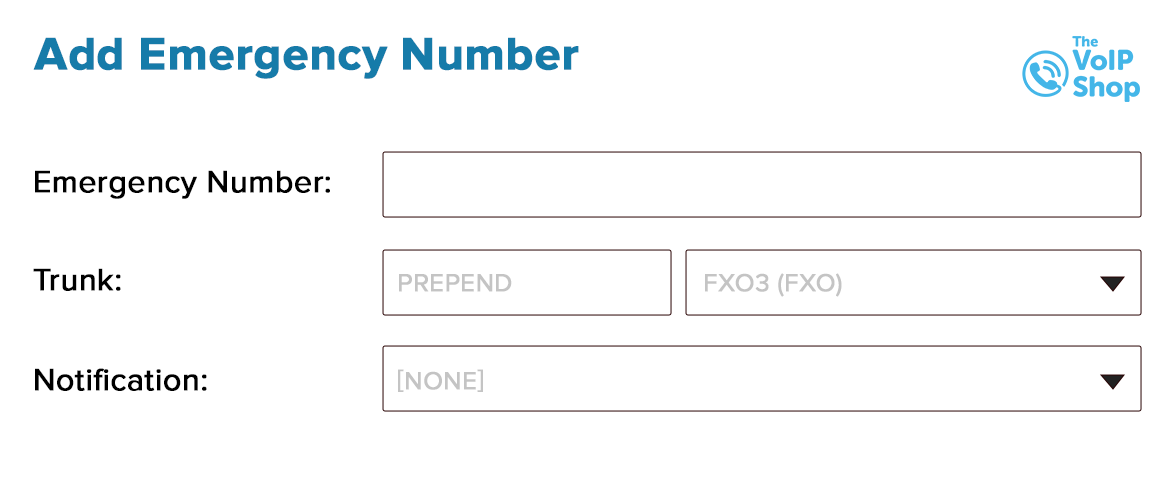
What Should Organisations Do Now?
If your premises has a capacity of 200 or more people, waiting until enforcement approaches is a risk.
1. Book a FREE Audit
Assess whether your current system supports emergency communication requirements.
2. Confirm Your Tier
Determine if you are Standard Tier (200–799) or Enhanced Tier (800+).
3. Plan & Test
Use the implementation period to trial real-world scenarios and emergency procedures.
4. Upgrade Early
Avoid last-minute compliance pressure and installation delays.
Get Expert Support from The VoIP Shop
Upgrading to The VoIP Shop’s Cloud-Hosted VoIP Phone System provides a practical, future-proof way to support Martyn’s Law compliance, while also improving everyday communication, flexibility, and resilience.
Why people choose The VoIP Shop?
10+ years supporting UK communications
Assured supplier on the NHS Advanced Telephony BPF
UK-based support team, available 24/7
Clear advice without technical confusion
Are you prepared for THE BIG SWITCH OFF – January 2027
Read our Ultimate guide for businesses to prepare for the migration from legacy analogue and ISDN lines to a fully digital cloud phone system and lines.
- Free expert-written eBook covering the full BT landline switchover 2027 timeline
- Understand exactly how the landline to VoIP transition works
- Find out which devices (phones, alarms, lifts, card machines, fax lines) will be affected
- Step-by-step roadmap to upgrade without downtime or disruption
- Learn how VoIP improves reliability, flexibility, and business continuity
- Includes a practical migration checklist to keep your business fully prepared
- Designed for UK SMEs looking for a simple, clear guide to the BT landline switchover
Frequently Asked Questions about Martyns Law Emergency Communications
What is Martyn’s Law?
Martyn’s Law, formally the Terrorism (Protection of Premises) Act 2025, is UK legislation designed to improve public safety in premises expecting 200+ people. It mandates preparedness for evacuation, invacuation, lockdown, and emergency communication.
Which organisations need to comply with Martyn’s Law?
Publicly accessible buildings and events with a capacity of 200 or more people. This includes schools, hospitals, hotels, shopping centres, transport hubs, cultural venues, and event spaces.
Why is communication so important under Martyn’s Law?
Communication ensures that staff and occupants receive timely, accurate instructions during emergencies, reducing confusion and supporting evacuation, lockdown, or invacuation procedures.
Are small premises with fewer than 200 people affected?
Legally, no. However, the government encourages all organisations to adopt proportionate protective measures to improve safety.
How does cloud-hosted VoIP support compliance?
VoIP systems enable mass emergency notifications, integrate with existing PA and security systems, prioritise emergency calls, and provide accurate location information for responders.
What features should a compliant phone system include?
Key features include: Mass alerts across handsets and IP speakers, Zone-specific messaging, Emergency call prioritisation and automated alerts, Integration with PA and security systems, and Enhanced location reporting (ELINs, ERLs).
What are the benefits of upgrading before Spring 2027?
Early upgrades reduce compliance risk, avoid last-minute installation delays, support staff training and procedure testing, and improve overall communication efficiency and resilience.
How does The VoIP Shop help organisations comply?
The VoIP Shop provides a cloud-hosted VoIP system designed for public buildings, delivering mass alerts, emergency call handling, location accuracy, and integration with existing infrastructure. They also offer free audits and consultations.
What are the first steps organisations should take?
Book a free phone system audit, determine if your premises are Standard Tier (200–799) or Enhanced Tier (800+), review and test emergency procedures, and upgrade to a cloud-hosted VoIP system early to ensure readiness.