GP Practices
Cloud Telephony for GP Practices: A Practical Guide (2026)

The government's £240 million fund to help GP practices move off analogue phone lines closed in 2024. Most practices made the switch while it was open: NHS England confirmed that 92% of practices, more than 5,800, had moved to cloud-based telephony by March 2024.
So why does it need revisiting in 2026? Two reasons. The PSTN switch-off, the retirement of the UK's old copper phone network, is now months away rather than years. And a good number of practices installed a system quickly during the 2023/24 rush, without much chance to check whether it was actually the right fit.
This is written with practice managers and administrators in mind, though most of it applies equally if you handle telephony for a Primary Care Network (PCN) or Integrated Care Board (ICB).
Key Takeaways
- The £240 million GP telephony fund has closed; NHS England confirmed 92% of practices (over 5,800) had moved to cloud telephony by March 2024.
- Providing cloud telephony data through CQRS, the Calculating Quality Reporting Service, has been a contractual requirement since 2024/25.
- The PSTN switches off on 31 January 2027, and it affects more than handsets: alarms, card terminals and telecare pendants too.
- Cloud telephony improves how calls are handled, but it isn't a fix for demand or a substitute for reception staff.
- If your practice installed a system in a hurry during 2023/24, it's worth reviewing now rather than waiting for renewal.
Why This Still Matters for General Practice?
The 8am rush hasn't eased off. NHS England's most recent figures, covering 5,290 practices in May 2026, put calls to general practice at around 28.5 million for the month. Just over half, 54.8%, were answered directly, and 7.3% ended in a call-back request.
An analogue setup gives reception very little to work with when that volume lands at once. There's a fixed number of lines, no visibility over who's waiting, and once the lines are full, callers just get an engaged tone. Acloud-based phone system swaps hardware limits for software ones. Queuing, call-back and routing all become configurable, callers can be told where they sit in the queue rather than holding blind, and staff can answer from a desk phone, laptop or mobile, which matters if your team covers more than one site.
The effect can be sizeable. NHS England has pointed to Abbey Medical Centre in Warwickshire, where using call data to plan reception rotas brought abandoned calls down from 247 a day to 17 over six months.


Better for Staff, Not Just Patients
It's easy to frame this as purely patient-facing, but reception teams are usually the first to feel a badly designed phone system. A live wallboard, showing call volumes, average wait and abandoned calls as they happen, turns guesswork into something a team can plan around. When a receptionist can see a caller has already been on hold for six minutes, they can acknowledge it rather than sound rushed. It's a small thing, but it changes how a shift feels.
We've seen the same pattern outside general practice too. When
Gilbert Opticians moved onto a cloud system with their booking software built in, the aim was much the same as the one most GP practices are working towards: faster, better-informed patient contact without adding headcount. A system that talks to whatever your team already works in, such as EMIS or SystmOne, is what turns a phone system into something that saves staff time rather than something they have to fight against.
The 31 January 2027 PSTN Switch-Off
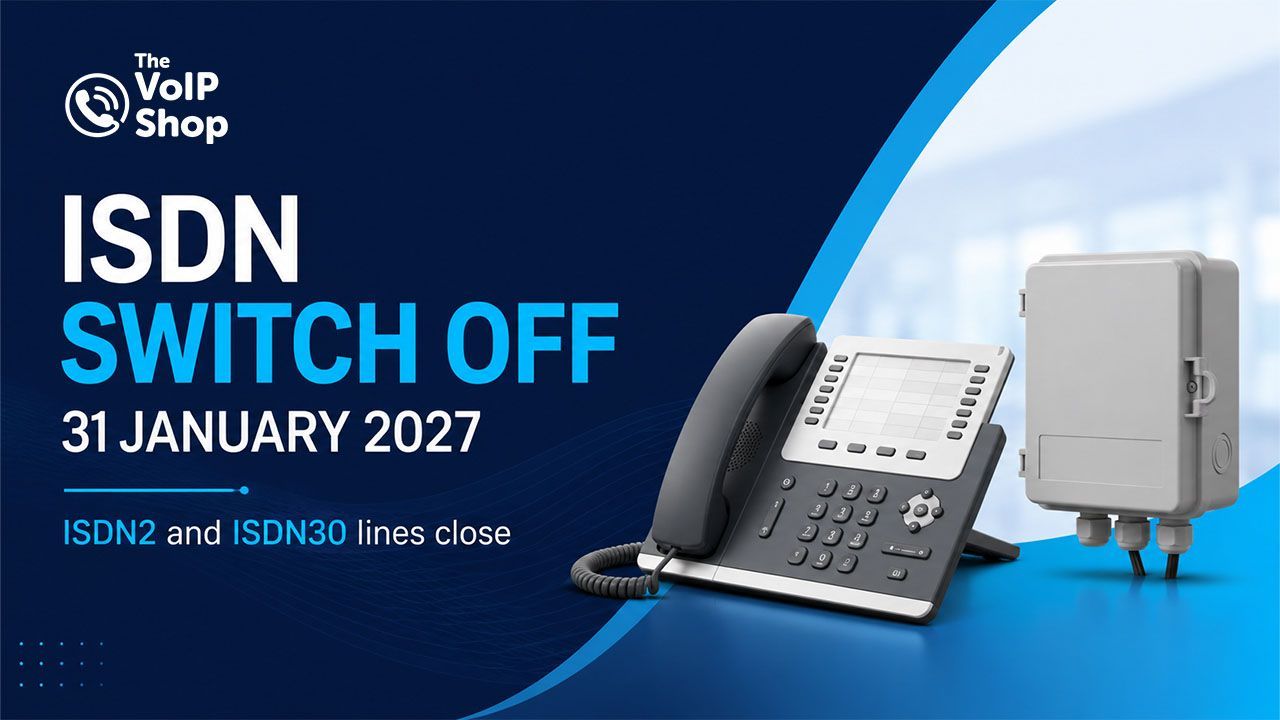
Openreach is retiring the copper network that has carried UK phone calls since the Victorian era. The final date is 31 January 2027, and Openreach has confirmed this deadline. As of July 2026, around 1.5 million lines nationally were still on copper, roughly 350,000 of them business premises. With the January 2027 deadline approaching, any practice still on an analogue line needs a plan now.
This isn't only about the handsets on reception, either. Lift alarms, fire and intruder panels, card payment terminals, telecare pendants and the odd fax machine still handling referrals often sit on the same copper lines, and in a healthcare building some of that is safety-critical.
Walk the building and list everything that might depend on a line before you sign anything. A decent supplier will ask about this as part of a proper audit rather than leaving you to find out in February. Our guide to the
BT landline switchover 2027 sets out the full migration timeline if it helps to have a checklist.
What Cloud Telephony Won't Fix
It wouldn't be honest to skip past this. No phone system creates clinical appointments, and none of them eases the underlying pressure general practice is under. It improves how contact with the practice feels and gives your team better tools, but the volume of demand itself sits well outside what any telephony contract can solve. The NHS Confederation has made a similar point, describing cloud telephony as no silver bullet for rising demand, though genuinely useful for patient experience and signposting. Be wary of any supplier promising more than that.
Where the Funding and Reporting Stand in 2026
The £240 million fund, announced in May 2023 through NHS England's Delivery Plan for Recovering Access to Primary Care, was a one-off capital round rather than an ongoing scheme. NHS England confirmed in March 2024 that 92% of practices, more than 5,800, had moved to cloud-based telephony. That round is now closed.
What's replaced it is an obligation rather than an incentive. Providing cloud telephony data through CQRS, the Calculating Quality Reporting Service, has been a contractual requirement since 2024/25, running until March 2030 with no funding attached. Anything locally available now depends on your ICB's own commissioning arrangements, and those shift over time, so your ICB or procurement contact will give you a far more reliable answer than any figure published online, this one included.
What GP Practices Should Do Next
- Confirm your CQRS reporting is up to date, so you're not carrying an admin gap alongside a technical one.
- Audit every line in the building, not just the phones. Lifts, alarms, card terminals and telecare pendants all count.
- Check what your existing contract costs to leave, and when it's due to end.
- Factor the January 2027 deadline into any renewal, rather than making two changes back-to-back.
- Ask any supplier for a proper site audit before they quote.
If you put a system in during 2023 or 2024 under time pressure, it was built for the practice you were then. List sizes shift, branch sites open and close, staffing models move on. Pull your last three months of call reports and check the system still fits the pattern you have now, not the one you had two years ago.
Choosing a Supplier: What to Check
A telephony contract usually runs for several years, so it's worth being thorough. Any supplier should be able to answer each of these clearly for a GP practice specifically, not in vague general terms.
1
Ask for a live demonstration rather than a line on a data sheet. This decides how quickly a receptionist can pull up the right record while a patient is still talking.
2
Check what the reporting produces, and whether it feeds your CQRS submission directly. Good reporting helps with rotas and evidencing improvement; weak reporting just sits in a dashboard nobody opens.
3
Check the contract carefully for long lock-in periods and early-exit costs, and confirm what happens if your list size grows or shrinks.
4
Ask how training is delivered, what the response time is for a critical fault, and exactly what happens to incoming calls if the practice loses its internet connection. Many systems divert to mobiles automatically. Not all of them do, and a silent phone line is a serious problem for a GP surgery.
Adding an AI Receptionist for Peak-Time Calls
If the 8am rush still outpaces your team, an AI receptionist for GP clinics can sit alongside your existing phone system as an add-on. It picks up routine enquiries at peak times and out of hours, handles simple prescription and appointment requests, and hands anything needing judgement straight to a person. It isn't a replacement for reception; it answers the calls your team physically can't get to quickly enough.
The VoIP Shop is an assured supplier on the NHS Advanced Telephony Better Purchasing Framework (BPF), listed by NHS England. That means GP practices can buy our cloud telephony through that framework, with the assurance checks already done.
Conclusion
If your practice is weighing up the move ahead of the switch-off, it's worth getting advice built around your setup rather than generic guidance. The VoIP Shop supplies
phone systems for GP surgeries across the UK and can talk you through what a system would look like for your practice, including the lines and devices that are easy to miss.
Cloud Telephony for GP Practices FAQs
Is cloud telephony the same as VoIP?
What's the best phone system for a GP practice?
When is the PSTN switch-off for GP practices?
Will patients notice a difference if we switch?
Do we need new hardware?
What happens if the internet goes down?
Is there still funding available?
Written By | About the Author
kullbant singh hothi has over 15 years of experience in the VoIP and telecoms industry. Drawing on a background in telecoms sales and leadership, he provides expert, impartial advice on VoIP and cloud telephony solutions. As a lead author for The VoIP Shop,
kullbant singh hothi
helps businesses understand and adopt modern communication technologies