ISDN Alternatives: The 4 Main Options for UK Businesses in 2027
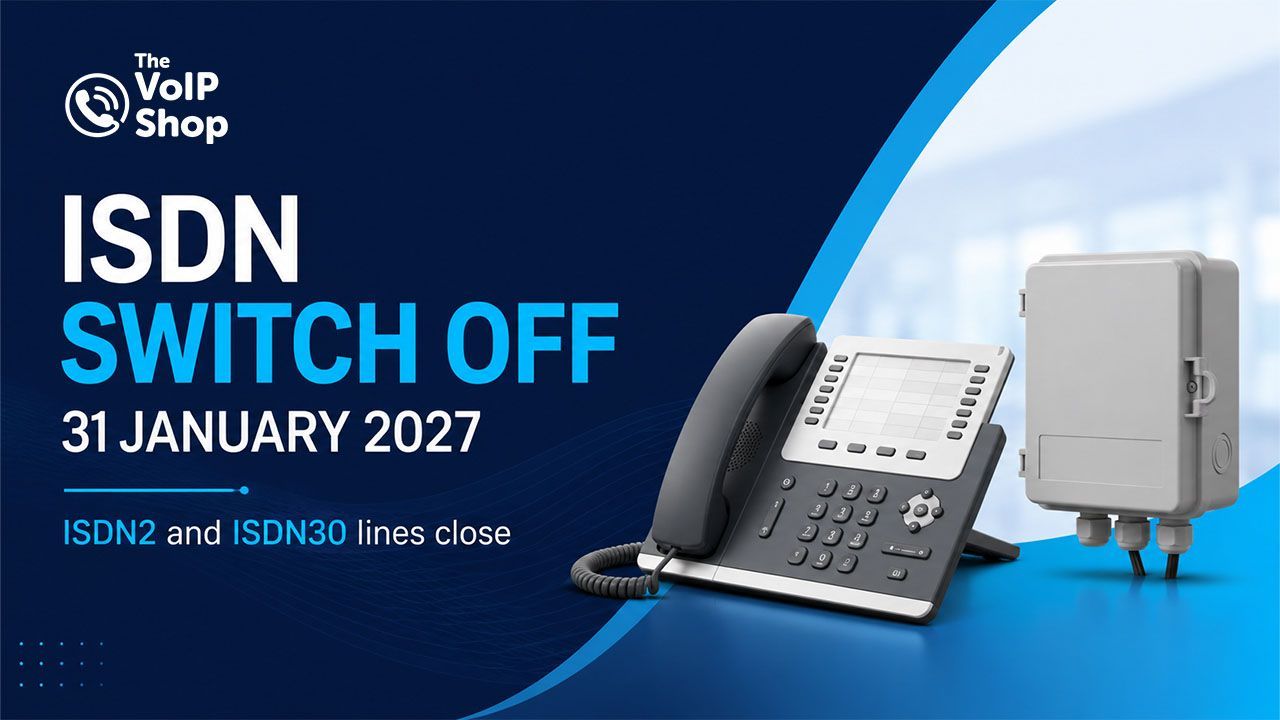
The main ISDN alternatives are SIP trunking, hosted VoIP, full fibre (FTTP) and hybrid phone systems. All ISDN2 and ISDN30 lines stop working on 31 January 2027, so every UK business still on ISDN needs to pick one before then.
This guide compares the four options and shows which one fits which kind of business, what each costs, and the broadband you need underneath.
What are the alternatives to ISDN?
The four main alternatives to ISDN are SIP trunking, hosted VoIP, full fibre (FTTP) and hybrid phone systems. All four carry calls over an internet connection instead of an ISDN line, and all four are available now.
ISDN is closing because BT and Openreach are retiring the network it runs on. New ISDN lines have not been available to order anywhere in the UK since September 2023, and every remaining ISDN2 and ISDN30 line stops working on 31 January 2027. There is no like-for-like ISDN product to move to. The choice is which digital alternative suits your business, not whether to move.
One option you will still see on older guides is “keep your ISDN lines until 2025”. Ignore it. That advice pre-dates the revised deadline, and you cannot order or keep ISDN past the 2027 switch off.
The 4 ISDN alternatives compared
There are four main alternatives to ISDN. This is how they compare.
| 1. SIP trunking | 2. Hosted VoIP | 3. Full fibre (FTTP) | 4. Hybrid | |
|---|---|---|---|---|
| What it is | Your existing PBX, with the ISDN lines replaced by internet trunks | A complete cloud phone system, no PBX on site | The fast digital connection VoIP and SIP run over | A mix of on-site PBX and cloud services |
| Best for | A modern PBX worth keeping | Most small and medium businesses | Fastest, most reliable connection | Phased, multi-site setups |
| Typical cost | £4 to £8 per channel/mo | £8 to £20 per user/mo | From ~£25 to £45/mo | Varies by setup |
| Timescale | 2 to 6 weeks | 2 to 4 weeks | 2 weeks to 3 months | Project based |
SIP trunking
SIP trunking keeps your existing phone system and replaces only the ISDN lines feeding it with internet-based trunks. It suits a business that has a modern on-site PBX it wants to keep. The trade-off is that you are still maintaining a physical PBX, so the saving is smaller than moving fully to the cloud.
Hosted VoIP
Hosted VoIP replaces the whole phone system with a cloud service. Your numbers, call routing, voicemail and mobile apps all live online, and there is no hardware to maintain on site. It suits most small and medium businesses. The trade-off is that it depends entirely on your internet connection, so the broadband underneath has to be sound.
Full fibre (FTTP)
Full fibre is not a phone system on its own. It is the connection that hosted VoIP or SIP trunking runs over, and it is the most reliable option because it uses no copper at all. Any business moving off ISDN should check whether full fibre is available at its address, because it removes the weak link that lets VoIP down.
Hybrid phone systems
A hybrid keeps some services on an on-site PBX and moves others to the cloud. It suits larger organisations migrating in stages, or sites that need to keep specific on-premises equipment for now. It is the most complex option to plan and usually a stepping stone rather than an end state.
 Watch: 43 seconds
Is your business ready for the UK Big Switch Off? Migrating from analogue to cloud VoIP.
Which ISDN alternative is best for my business?
The right ISDN alternative depends on whether you have a phone system worth keeping and how your sites are set up.
- No PBX, or an old PBX you are happy to retire. Choose hosted VoIP. It is the simplest, lowest-maintenance option and fits most SMEs.
- A modern on-site PBX worth keeping. Choose SIP trunking. You keep the system you have paid for and swap only the lines.
- Several sites. Hosted VoIP works best across multiple locations, with SIP at any site that keeps its own PBX.
- Poor or copper-based broadband. Sort the connection first. Get full fibre (FTTP) or SoGEA in place, then layer VoIP or SIP on top.
If you are not sure which applies, a short audit of your lines and phone system will tell you in one call.
How much do ISDN alternatives cost?
Most UK businesses pay between £8 and £20 per user per month for hosted VoIP, or £4 to £8 per channel per month for SIP trunking. Both usually include calls, maintenance and updates, which ISDN line rental and PBX maintenance did not.
Cost within that range depends on user numbers, handsets and call volumes. At The VoIP Shop, business plans start from £13.95 per user per month, with UK call bundles, 24/7 UK-based support and a dedicated account manager included. The fair comparison is not line rental against subscription. It is everything you spend today on ISDN rental, call charges and PBX maintenance against one predictable monthly figure.
Do I need new broadband to replace ISDN?
VoIP and SIP trunking both need a digital internet connection, so your broadband matters as much as the phone system. Full fibre (FTTP) is the best option and is not affected by the switch off. Copper broadband, such as ADSL and older FTTC, is being retired under a separate copper programme, not the 2027 voice deadline, so check what your business is on before you migrate.
Where full fibre is not yet available, SoGEA is a digital connection that does not rely on the analogue network and works well for VoIP in the meantime.
ISDN alternatives FAQs
What are the alternatives to ISDN?
Is SIP trunking or hosted VoIP better for replacing ISDN?
What is the best ISDN alternative for a small business?
How much do ISDN alternatives cost?
Can I keep my phone number when moving off ISDN?
Do ISDN alternatives work as well as ISDN for call quality?
What is the best ISDN alternative for a multi-site business?
What broadband do I need for an ISDN alternative?
Not sure which ISDN alternative is right for you?
We will look at your lines, your phone system and your broadband, and tell you which option fits and what it will cost. No obligation. For over 10 years we have moved UK businesses off ISDN with 24/7 UK-based support.
Written By | About the Author

Kully Hothi
Sales Director
Kully Hothi is Sales Director at The VoIP Shop and one of the company's lead authors. He has worked in UK telecoms since 2011, and has taken thousands of businesses through the move off ISDN and analogue lines onto cloud phone systems, porting numbers and cutting over without downtime. He is sales certified across 3CX, Yeastar and Cisco as well as Openreach and all four major UK mobile networks, which is why he looks at phones, mobiles and connectivity together rather than as three separate problems. More about Kully Hothi.