SIP TRUNKING
Top 10 Benefits of SIP Trunking
Discover how UK SMEs are cutting costs, improving resilience, and enabling hybrid work by upgrading from
legacy ISDN to modern SIP trunking.
Did You Know?
16.1%
Average reduction in telecom costs for businesses implementing SIP trunking.
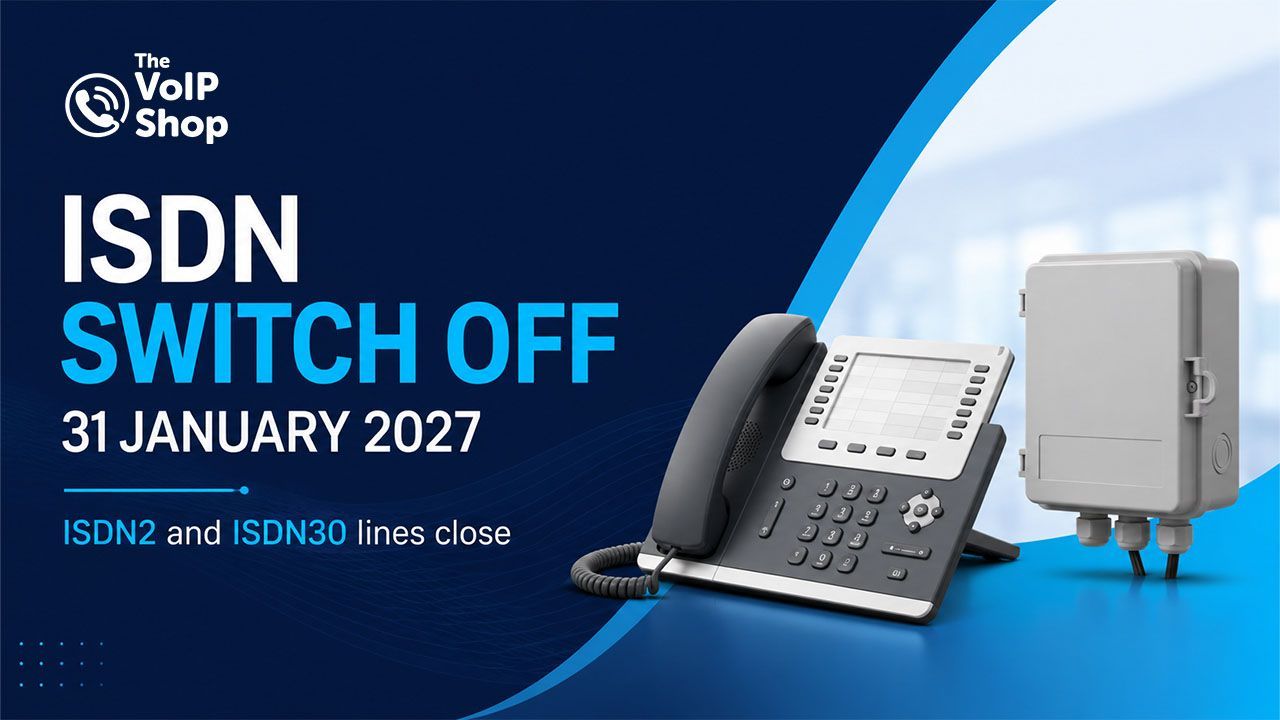
SIP-based services now underpin a large share of new UK business voice deployments ahead of the
ISDN switch-off.
SIP trunking is a core enabler for hybrid work, letting staff use office numbers from anywhere.
Why SIP Trunking Matters to UK SMEs?
UK small and medium-sized enterprises are under pressure to cut costs, improve customer experience and support flexible working – all without enterprise-level IT budgets.
SIP trunking offers a practical way to modernise telephony by replacing legacy ISDN lines with virtual trunks that run over your internet connection. In this post, we unpack the real-world benefits of SIP trunking for UK SMEs, showing how it can reduce spend, improve reliability and make your business more agile.
What Is SIP Trunking?
SIP (Session Initiation Protocol) is a standard that sets up and manages calls over the Internet. A SIP trunk is the virtual equivalent of multiple phone lines, connecting your phone system (PBX) to the outside world over IP instead of copper.
For SMEs, this means you no longer need to buy fixed "blocks" of phone lines. Instead, you use your data connection for voice, adding or removing call capacity as your business changes.
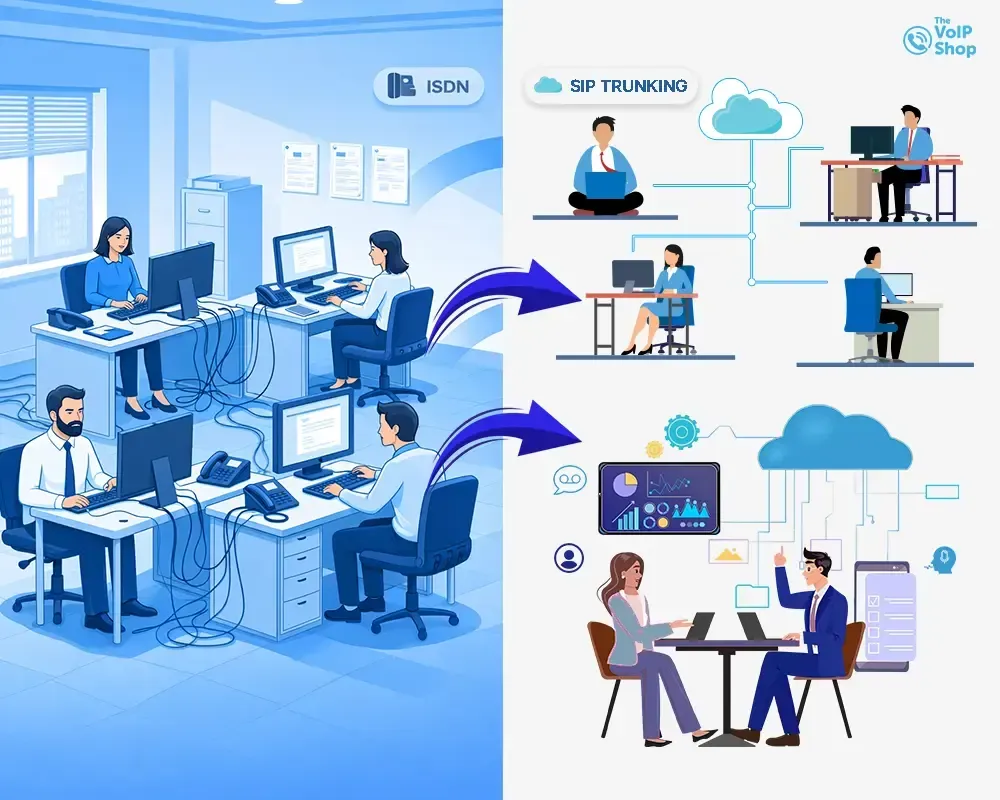
SIP Trunking vs ISDN: Quick SME Comparison
| Aspect | ISDN (Legacy) | SIP Trunking (Modern) |
|---|---|---|
| Provisioning | Physical lines, engineer visits | Virtual, provisioned remotely over IP |
| Scalability | Slow, needs new circuits | Fast, add/remove channels in software |
| Cost structure | Line rental + call charges | Internet + SIP channels + calls |
| Number flexibility | Tied to the office location | Cloud-managed, easy to move/add |
| Business continuity | Limited rerouting options | Flexible routing to other sites/mobiles |
| Fit for hybrid work | Office-centric | Designed for remote & flexible working |
What Are the Top 10 Benefits of SIP Trunking?
1. Cost Savings and Predictable Bills for SMEs
Telecoms spend is a major recurring cost for many SMEs. SIP trunking helps by replacing expensive ISDN line rental with virtual trunks over your existing internet connection. It offers clearer per-channel pricing and cuts long-distance charges, directly supporting margins.
2. Scale Up (or Down) Without Hassle
When an SME grows, the last thing you want is to wait weeks for new phone lines. With SIP trunking, you can increase concurrent call capacity quickly via a portal, or scale back if demand drops. This elasticity is ideal for seasonal or fast-growing businesses.
3. Faster Deployment and Less Disruption
Because SIP trunks are virtual, you can often go live without major on-site works. For SMEs with limited IT resources, that means less downtime, fewer interruptions, and quicker projects—from decision to live service in days rather than weeks.
4. Resilience and Business Continuity
A single site outage can hit an SME hard. SIP trunking makes your phone system more resilient by allowing automatic rerouting of calls to mobiles or another office if your main site goes offline, protecting your revenue and reputation.
5. Better Customer Experience
Even if you are not a big call centre, you rely on phones for sales and support. SIP trunking supports more concurrent calls and integrates easily with modern contact solutions (CRM, IVR), meaning fewer busy tones and faster responses.
6. Unified Communications
SIP trunking is a building block for unified communications. It allows integrating phone calls with platforms like Microsoft Teams, giving staff a single, consistent way to communicate internally and externally without enterprise complexity.
7. Analytics and Insight
Because SIP trunking is digital, you can access call statistics to manage a small team more effectively. Track call volumes, answer times, and identify peak hours to schedule people when customers need you most.
8. Supporting Hybrid Work
SIP trunking supports flexible working by allowing home or remote workers to use office numbers via softphones. Everyone stays on the same internal numbering plan, maintaining a professional front to customers.
9. Number Flexibility and
Local Presence
SIP makes it much easier to move office or expand. You can keep your existing main numbers when moving, and add local numbers in different UK regions without opening physical offices to project a national presence.
10. Easier Path to Full VoIP
Jumping straight to a fully hosted VoIP system can feel like a big leap. SIP trunking offers a gentler path: keep your existing phone system while moving external lines to SIP, then phase in cloud features over time.
For UK SMEs, choosing the right partner is as important as choosing the right technology.
We make SIP trunking simple, reliable and cost-effective.
Tariffs and bundles sized for SMEs, so you are not forced into enterprise-scale contracts.
Tariffs and bundles sized for SMEs, so you are not forced into enterprise-scale contracts.
We help design call flows and failover routes so your SME has enterprise-style continuity.
As you grow, we adjust capacity and help you add features like call queues or IVR.
Frequently Asked Questions
What is SIP trunking?
It is a way for your business phone system to make and receive calls over the internet instead of using traditional ISDN phone lines.
How does SIP trunking save money for UK SMEs?
It cuts line rental and call charges, uses your existing internet connection and offers clearer monthly pricing than legacy telephony.
Is SIP trunking reliable enough for small businesses?
Yes, with a quality provider and proper design, SIP can include failover routing so calls automatically divert during outages.
Do I need a new phone system to use SIP trunking?
You need an IP-capable PBX or a SIP gateway; many modern systems already support SIP, but older ones may need upgrading.
How does SIP trunking support hybrid and remote work?
Staff can use office numbers via softphones or IP phones from home, staying part of the same internal system wherever they work.
Can I keep my existing numbers when switching to SIP?
In most cases you can port your current business numbers to SIP and also add new local or non-geographic numbers.
What bandwidth do I need for SIP trunking?
You need enough upload/download capacity for your peak number of concurrent calls plus data traffic; your provider can help calculate this.
Is SIP trunking secure for SMEs?
With encryption, good configuration and proper network controls, SIP trunking can be secured to meet typical SME security needs.
Ready to Upgrade Your Business Communications?
Don't wait for the ISDN switch-off. Speak to our UK-based experts today to find out how much you could save with
SIP trunking from The VoIP Shop.